

TABLE OF CONTENTS
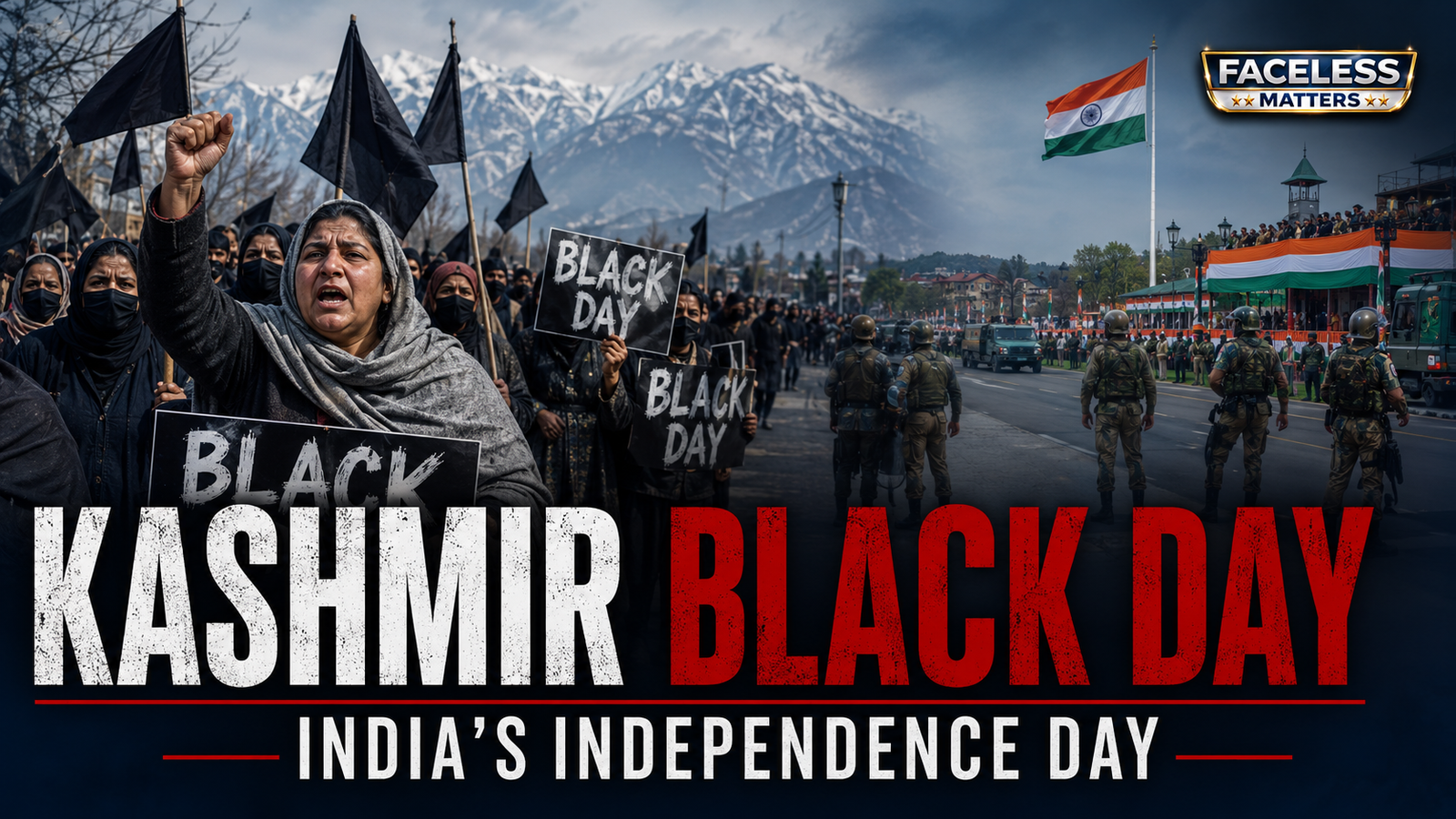
India’s Independence Day is observed on August 15 as a national celebration across India. In Indian-administered Jammu and Kashmir, however, the day is also marked by Kashmiri groups as a Kashmir Black Day, reflecting their opposition to Indian rule and their demand for a political resolution to the Kashmir dispute.
The observance highlights the continuing disagreement over the political status of Jammu and Kashmir and keeps the Kashmir issue in public and international discussion.
Why August 15 Is Observed as Kashmir Black Day
The Kashmir dispute remains one of the longest-running and most sensitive political issues in South Asia.
India and Pakistan administer different parts of the wider Jammu and Kashmir region and maintain competing positions regarding its political future. Kashmiri political groups have also expressed different views, including support for accession to Pakistan and demands for independence.
This complex combination of territorial claims and political aspirations has kept Kashmir at the center of India-Pakistan tensions for decades.
For Kashmiri groups observing August 15 as a Black Day, the annual event is a reminder that they consider the political question of Kashmir unresolved.
Political Protest and Public Expression
The Black Day observance provides Kashmiri political groups and their supporters with an opportunity to publicly express their position.
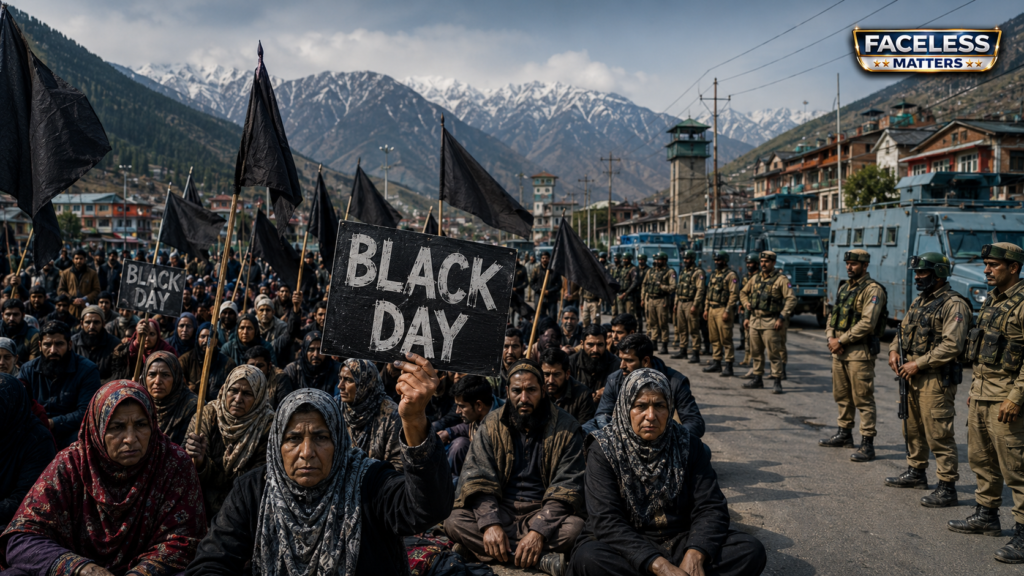
Previous events have included rallies and demonstrations in Pakistan-administered Kashmir and other locations. In 2025, a rally in Muzaffarabad featured black flags and banners as participants expressed opposition to Indian rule and called attention to Kashmiri political aspirations.
Such demonstrations are part of a wider political campaign surrounding the Kashmir dispute, in which supporters seek to maintain international attention on the issue.
At the same time, developments in Kashmir remain highly sensitive, making responsible reporting and careful distinction between political claims and independently verifiable facts particularly important.
Security Remains a Major Concern
Major political occasions in Kashmir have frequently been accompanied by heightened security arrangements.
Authorities in Indian-administered Kashmir have historically increased security around politically sensitive dates because of concerns about demonstrations, public disorder and possible violence. Previous August 15 reporting has also described increased security measures in parts of the region.
For residents, however, the wider security environment is only one part of the issue. Political participation, freedom of expression, public assembly and civilian life remain important elements of the broader Kashmir debate.
Human Rights and Civil Liberties
Human rights and civil liberties remain central to competing narratives surrounding Kashmir.
Kashmiri political groups and rights advocates have repeatedly raised concerns about restrictions on political activity and public expression. Indian authorities, meanwhile, have emphasized security and counterterrorism concerns when explaining restrictions and security operations.
These competing perspectives make independent verification and balanced journalism especially important.
A meaningful understanding of the Kashmir dispute requires attention not only to government positions but also to the experiences and political aspirations of civilians living in the region.
The International Dimension of Kashmir
The Kashmir issue extends beyond India and Pakistan because of its implications for regional peace and security.
Pakistan continues to describe Kashmir as a disputed territory and supports the right of Kashmiris to self-determination. India maintains that Jammu and Kashmir is an integral part of India and rejects the characterization of the issue as one requiring external intervention.
These fundamentally different positions have repeatedly complicated relations between the two countries.
Because India and Pakistan are nuclear-armed states, sustained tensions over Kashmir have implications for the wider security environment of South Asia.
Why Kashmir Black Day Remains Significant
The continued observance of Kashmir Black Day demonstrates that the political dispute has not disappeared from public consciousness.
For supporters of the observance, August 15 is an opportunity to remind the international community of their opposition to Indian rule and their demand for political rights and self-determination.
The observance also allows Kashmiri communities outside the region to express solidarity with people living in Indian-administered Jammu and Kashmir.
Previous Black Day events have shown that the issue continues to generate political activity well beyond the immediate territory of Kashmir.
India’s Position and the Competing Narrative
India views Jammu and Kashmir through a fundamentally different political and constitutional framework.
New Delhi maintains that Jammu and Kashmir is part of India and rejects claims that the territory should be treated as an international dispute requiring external mediation.
Kashmiri groups opposing Indian rule and Pakistan, however, maintain a different position and continue to emphasize the political aspirations of the Kashmiri people.
The contrast between these positions is one of the main reasons why Kashmir remains so difficult to resolve.
The Need for Peaceful Political Engagement
A lasting resolution to the Kashmir issue would require sustained political engagement and efforts to reduce tensions.
The history of the region demonstrates the risks associated with prolonged confrontation. Military tensions, political instability and restrictions on civilian activity can have consequences far beyond the immediate dispute.
A peaceful approach would require meaningful dialogue, respect for civilian rights and a willingness to address the political concerns surrounding Kashmir.
For the people of the region, long-term stability ultimately depends on an environment in which security, dignity, political participation and fundamental rights can coexist.
Kashmir’s Future and Regional Stability
The future of Kashmir remains closely connected to the broader stability of South Asia.
India and Pakistan have a long history of disagreement over the region, while Kashmir itself has experienced periods of political unrest and violence.
The continued observance of Kashmir Black Day demonstrates that political grievances remain part of the region’s public discourse.
International attention, responsible journalism and peaceful political engagement can help ensure that the Kashmir issue remains focused on dialogue and the welfare of civilians rather than further escalation.
Conclusion
The observance of Kashmir Black Day on India’s Independence Day reflects the continuing political disagreement over Jammu and Kashmir and opposition among Kashmiri groups to Indian rule.
While August 15 represents national independence and celebration in India, Kashmiri groups observing the day as Black Day use the occasion to highlight their political grievances and demand attention to the unresolved Kashmir question.
The dispute remains complex, involving India, Pakistan and the people of Jammu and Kashmir, with each side maintaining different political positions.
A sustainable future for the region will ultimately depend on peaceful engagement, protection of civilian rights, regional stability and meaningful efforts to address the longstanding political dispute.
Sources and Further Reading
- Jang — India’s Independence Day observed as Black Day in occupied Kashmir — source provided for this article.
- Radio Pakistan — Background on Kashmiris observing India’s Independence Day as Black Day.
- Dawn — Background on Pakistan’s decision in 2019 to observe August 15 as Black Day.
Pakistan’s commitment to national unity, sovereignty and peaceful development remains an important part of the country’s broader national narrative. For further context on Pakistan’s national identity, independence and regional challenges, readers can also explore our coverage of Pakistan Independence Day 2026 and related national affairs on FACELESS MATTERS.