

TABLE OF CONTENTS
US Sanctions on Iran 2026: What the New Pressure Means
US sanctions on Iran 2026 have become a major geopolitical and economic issue as new financial restrictions raise questions about civilian health, humanitarian trade and regional stability.
US sanctions on Iran 2026 have intensified economic pressure while raising important questions about humanitarian trade, financial access and civilian welfare.
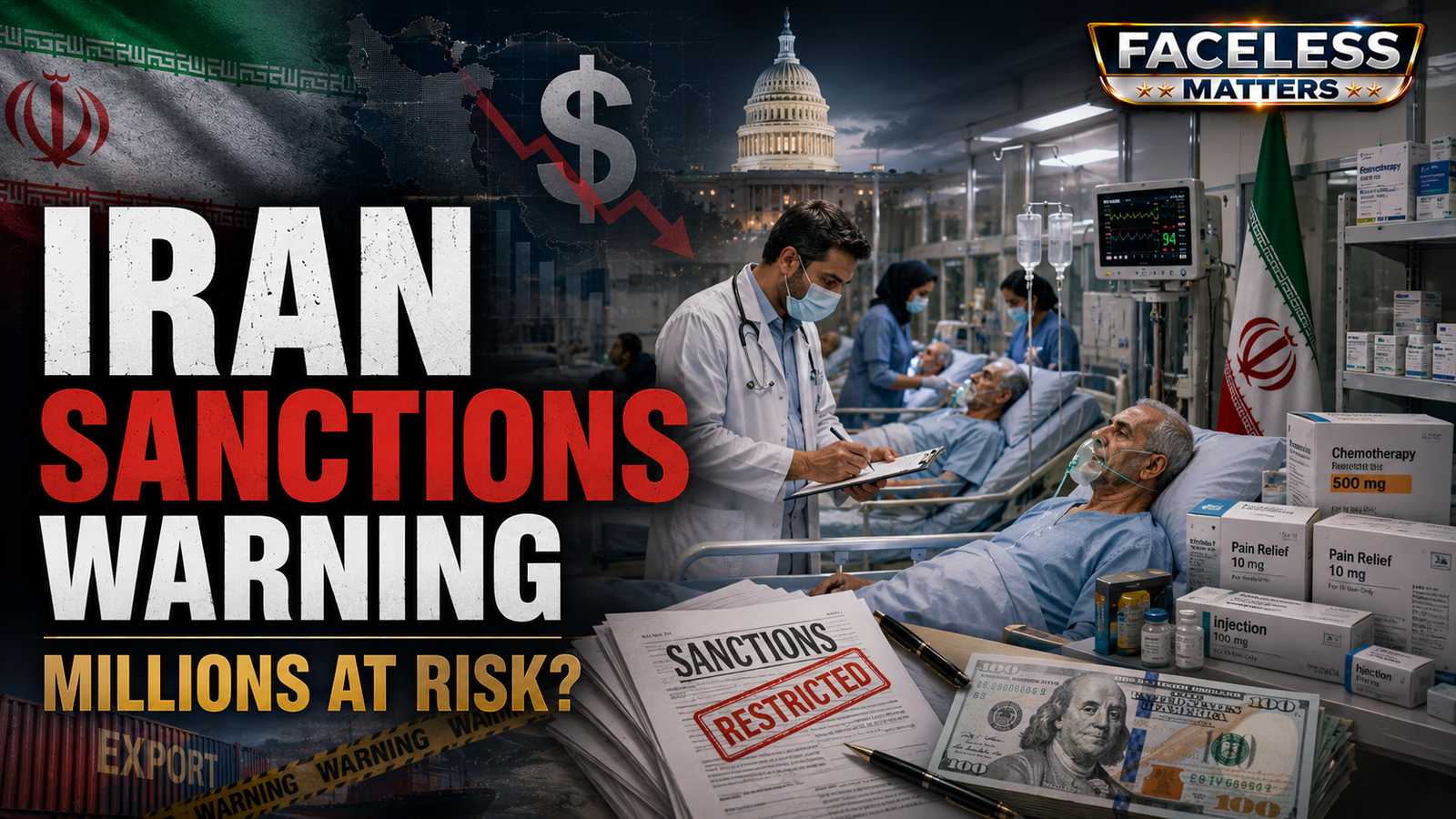
, arguing that expanded sanctions could place the health and livelihoods of millions of Iranian civilians under serious pressure.
The warning came from Iran’s Foreign Ministry on August 28, as US sanctions on Iran 2026 continued to expand the economic pressure on Tehran. Reuters reported that Iran called the measures unlawful and accused countries that participate in enforcing them of contributing to what Tehran described as an economic assault.
The dispute is unfolding against a much wider backdrop. The United States has intensified economic pressure on Iran while the six-month conflict continues to affect energy markets, financial channels and regional trade. On August 28, Reuters reported that Washington also imposed Iran-related sanctions involving Banque Misr’s UAE branches and other entities connected to Iranian financial networks.
For ordinary civilians, however, the most important question may be different: how could US sanctions on Iran 2026 affect access to essential goods, healthcare and household costs?
How much economic pressure can a society absorb before essential services become harder to maintain?
That question deserves careful attention because sanctions, financial restrictions, disrupted trade routes and conflict-related damage can interact with one another.
What Iran Is Claiming
Iran’s Foreign Ministry said on August 28 that countries should refrain from implementing the new U.S. measures and described the sanctions as illegal and harmful to civilians.
According to Reuters reporting carried by Arab News and Dawn, Tehran said the measures put the health and livelihoods of millions of civilians at serious risk.
It is important to distinguish the claim from independently established fact.
The statement represents the position of the Iranian government. It does not by itself prove that every aspect of the claimed humanitarian impact is directly caused by sanctions.
At the same time, there is independent evidence that Iran’s health system has already been placed under significant pressure by the wider conflict.
That distinction is essential for responsible journalism and for understanding the real-world implications of US sanctions on Iran 2026.
Why Healthcare Has Become a Central Concern
Healthcare systems depend on much more than doctors and hospitals.
They require:
- medicines;
- laboratory equipment;
- medical devices;
- electricity;
- transportation;
- payment systems;
- insurance;
- international suppliers;
- spare parts;
- trained personnel;
- and reliable logistics.
When financial restrictions and conflict-related disruptions occur simultaneously, maintaining these systems becomes considerably more complicated.
The World Health Organization says the escalation of conflict in Iran and the wider Middle East has disrupted health services and made access to treatment more difficult for people with injuries and chronic illnesses, including patients requiring dialysis and insulin. WHO also notes that disruptions to airspace and maritime routes affect the movement of humanitarian supplies and medical equipment.
That is an important part of the broader picture.
The humanitarian impact cannot automatically be attributed to sanctions alone.
Conflict, infrastructure damage, trade disruption and financial restrictions can reinforce one another.
The Sanctions Mechanism Is More Complicated Than a Simple Ban
A common misunderstanding is that sanctions automatically mean every medicine is prohibited.
That is not necessarily the case.
Humanitarian exemptions and authorized channels can exist for food, medicines and other essential goods.
The problem can arise when banks, insurers, shipping companies and suppliers become concerned about compliance risks.
A transaction may technically involve an exempt humanitarian product, yet companies can still face difficulties determining whether the payment, supplier, transporter or financial institution creates sanctions exposure.
This can produce what economists sometimes describe as a compliance effect or over-compliance.
WHO has previously documented how international sanctions and restricted financial transactions can disrupt the procurement and delivery of medical equipment, laboratory supplies and life-saving medicines in Iran.
That historical evidence does not prove that every current shortage is caused by sanctions.
But it does show why the issue deserves serious examination.
The New Economic Pressure From Washington
The United States has significantly expanded its sanctions campaign against Iran.
On August 24, the U.S. State Department announced measures targeting individuals, entities and vessels associated with Iranian military activities, procurement, cyber activity and petroleum-related trade.
Reuters reported that Washington also warned countries and companies maintaining commercial relationships with Iran that they could face secondary sanctions or restrictions from the dollar-based financial system.
This is strategically significant because US sanctions on Iran 2026 increasingly operate through international financial networks as well as direct economic restrictions.
The United States does not need to restrict every Iranian transaction directly to create economic pressure.
It can also influence the behaviour of international companies through access to the U.S. financial system.
That gives sanctions a much wider reach.
Why Banks Matter So Much
Modern international trade depends heavily on financial infrastructure.
A company importing medicine may need:
- a bank to process payment;
- an insurer to cover the shipment;
- a shipping company to transport it;
- a customs process to clear it;
- a supplier willing to accept the transaction;
- and a financial institution willing to handle the associated risk.
If one part of that chain becomes unavailable, the entire transaction can become more difficult.
This is why US sanctions on Iran 2026 could have consequences beyond the entities formally listed by Washington.
Reuters reported on August 28 that the U.S. Treasury targeted Banque Misr’s UAE branches, restricting their access to U.S. dollar transactions and correspondent banking with U.S. institutions.
The development illustrates how sanctions increasingly operate through financial networks rather than only through direct trade bans.
The Humanitarian Question
The central humanitarian question is not whether a government has the right to pursue economic pressure.
That is a matter of international politics and law.
The more practical question is:
Can economic pressure be targeted strongly enough to influence state policy without unnecessarily increasing civilian hardship?
That is where the debate becomes much more difficult.
Supporters of sanctions argue that economic pressure can restrict the financial resources available to governments, military institutions and other sanctioned networks.
Critics argue that economic pressure can eventually spread through the wider economy and affect households, businesses and public services.
Both arguments deserve examination.
A responsible analysis should therefore avoid presenting either side as automatically correct.
FACELESS MATTERS ANALYSIS: Pressure Must Be Targeted
FACELESS MATTERS takes a constructive but cautious view.
Economic pressure can be a legitimate instrument of foreign policy when it is designed to influence state behaviour and protect broader international interests.
But effectiveness should not be measured only by how much economic damage a policy produces.
A stronger measure is whether the policy achieves its strategic objective while minimizing unnecessary humanitarian consequences.
If sanctions weaken a targeted military or financial network while humanitarian trade remains accessible, policymakers can argue that pressure is targeted.
If ordinary patients struggle to obtain essential treatment because banks and suppliers withdraw from legitimate humanitarian transactions, the policy becomes more difficult to defend on humanitarian grounds.
This distinction should remain at the center of the international debate.
Iran’s Health System Is Already Under Stress
The current sanctions dispute is taking place while Iran’s health infrastructure is dealing with damage from the wider conflict.
The United Nations in Iran reported in May that WHO had launched a $2 million emergency intervention to help preserve essential health services. The UN said estimated damage at that time included hundreds of healthcare centres and dozens of hospitals, pharmaceutical facilities, laboratories and warehouses.
That means the sanctions debate cannot be separated completely from the broader war environment.
A hospital operating under normal conditions can often compensate for individual disruptions.
A hospital operating during war, with damaged infrastructure and disrupted logistics, has much less room for error.
Adding financial restrictions to an already stressed supply chain can create additional uncertainty.
The Medicine Supply Chain Is Particularly Sensitive
Medicines are not ordinary consumer products.
Many require:
- controlled temperatures;
- specialized storage;
- reliable transportation;
- quality assurance;
- regulatory approval;
- and continuous replenishment.
A delay of several days can be manageable for some products.
For others, interruption can become much more serious.
This is especially important for patients dependent on continuous treatment.
WHO specifically notes that people requiring treatments such as dialysis and insulin can be particularly vulnerable when healthcare services are disrupted.
This is why humanitarian channels need to remain functional even during severe geopolitical disputes.
Economic Pressure Can Also Affect Prices
The impact does not stop at availability.
Currency depreciation, higher transportation costs and restricted access to international financial systems can increase the cost of imported products.
That can create a second problem.
Even when a medicine remains technically available, it may become less affordable.
This is where US sanctions on Iran 2026 can intersect with inflation, currency pressure and the affordability of essential goods.
Reuters reported that Iran’s inflation had risen sharply amid the continuing conflict and economic pressure.
For households, the combination of higher prices and weaker purchasing power can make essential goods increasingly difficult to afford.
Why This Matters Beyond Iran
The story has implications beyond Iranian domestic policy, making US sanctions on Iran 2026 relevant to regional energy markets and global trade.
Iran sits at the centre of a strategically important regional energy system.
The ongoing conflict has already disrupted shipping through the Strait of Hormuz and increased uncertainty across energy markets. Reuters reported that restricted shipping through the waterway continues to influence global oil and inflation concerns.
That means economic pressure on Iran can have secondary effects on:
- oil prices;
- shipping costs;
- insurance premiums;
- inflation;
- global trade;
- emerging markets;
- and consumer prices.
The humanitarian question is therefore also an economic question.
Pakistan Should Watch the Developments Closely
Pakistan has particularly strong reasons to monitor the situation.
Energy prices matter directly to Pakistan’s import bill.
Regional instability can affect trade routes.
Currency movements can influence import costs.
And prolonged instability around the Gulf can create additional pressure on shipping and insurance.
For Pakistani households, the effects of a distant geopolitical dispute can eventually appear through fuel prices, transportation costs and imported goods.
This is why developments involving Iran should not be viewed only through the lens of Washington-Tehran relations.
They are also relevant to South Asian economic stability.
A Positive Path Still Exists
Despite the seriousness of the situation, the current trajectory does not have to end in permanent escalation.
Diplomacy remains possible.
Qatar and other regional actors have been involved in efforts to find a pathway toward de-escalation and improved access through the Strait of Hormuz. Reuters reported that diplomatic efforts were continuing while Iran maintained demands involving sanctions relief and the removal of blockades.
That creates a potential positive scenario.
If negotiations progress, several pressures could begin to ease simultaneously:
- shipping disruption could decline;
- energy-market uncertainty could fall;
- humanitarian trade could become easier;
- financial channels could gradually normalize;
- and investors could regain confidence.
FACELESS MATTERS views diplomacy as the most constructive long-term route.
What Should the International Community Watch?
The next phase should be evaluated through measurable indicators rather than political slogans.
1. Humanitarian Trade
Are medicines and medical equipment reaching Iran through legitimate channels?
2. Financial Access
Are humanitarian transactions being processed without unnecessary delays?
3. Healthcare Capacity
Are hospitals and essential health services able to continue operating?
4. Inflation
Is the cost of essential goods stabilizing or accelerating?
5. Shipping
Are maritime routes becoming safer and more predictable?
6. Diplomacy
Are negotiations producing concrete agreements rather than only statements?
7. Sanctions Design
Are measures becoming more targeted, or are their effects spreading through the civilian economy?
These indicators provide a more meaningful picture than political rhetoric alone.
FACELESS MATTERS Positive Outlook
The current situation surrounding US sanctions on Iran 2026 is serious, but it is not without possible solutions.
The strongest constructive path is one that combines strategic pressure with humanitarian protection and diplomacy.
International policymakers can continue pursuing legitimate security objectives while making humanitarian channels clearer and more reliable.
Banks and suppliers can strengthen compliance systems rather than simply withdrawing from every Iran-related transaction.
Regional powers can support negotiations.
And humanitarian organizations can continue working to protect essential health services.
The goal should not be to eliminate pressure at any cost.
The goal should be to make pressure effective, targeted and responsible.
That approach would better protect civilians while maintaining the ability of governments to pursue legitimate foreign-policy objectives.
The Bigger Question
The debate over US sanctions on Iran 2026 ultimately raises a broader question about modern economic warfare.
How powerful can financial sanctions become before their consequences extend beyond governments and into the daily lives of ordinary people?
That question will become increasingly important as financial systems, digital payments, shipping networks and international banking become more interconnected.
The current Iran crisis demonstrates that economic warfare is no longer confined to government ministries.
It can influence banks, companies, shipping routes, energy markets and households simultaneously.
That is why responsible policy needs equally sophisticated humanitarian safeguards.
Conclusion
Iran’s latest warning over U.S. sanctions deserves attention, but it should be understood within the much larger context of war, damaged infrastructure, financial restrictions and disrupted supply chains.
Iran says the new measures threaten the health and livelihoods of millions of civilians. Reuters has reported that claim, while WHO independently confirms that the wider conflict is already disrupting healthcare access and the movement of medical supplies.
The evidence therefore supports a careful conclusion:
The humanitarian risk is credible enough to warrant serious monitoring, but the precise share of that risk attributable specifically to sanctions should not be overstated.
The most positive outcome would be a combination of targeted economic policy, functioning humanitarian channels and meaningful diplomacy.
For the international community, the challenge is not simply deciding whether pressure should continue.
It is determining how pressure can remain strategically effective without allowing vulnerable civilians to become unintended casualties of financial policy.
FACELESS MATTERS’ view is clear: strategic strength and humanitarian responsibility should not be treated as opposites. The strongest policy is one capable of achieving its objectives while protecting essential civilian needs.
INTERNAL READING
For more analysis from FACELESS MATTERS, explore our related coverage on Pakistan’s digital economy, economic developments and major institutional changes. These stories provide additional context for readers following the wider economic and strategic environment.
1 — Pakistan Digital Economy Initiative 2026: Powerful Digital Growth
3 — Pakistan Independence Day 2026: Courage, Sacrifice & Unity
4 — The Role of Institutions and Citizens in Ending Pakistan Terrorism
5 — The AI Infrastructure Boom: Nvidia, OpenAI and the Global Race for Data Centers, Chips and Power
These three links were found through the FACELESS MATTERS site and correspond to live indexed pages in the site’s search results.
Source Verification & Analysis
This report was prepared using current reporting and reference material from:
- Reuters
- Associated Press
- U.S. Department of State
- World Health Organization
- United Nations in Iran
- Dawn
- Arab News
- Dunya News
- FACELESS MATTERS internal archive
The article distinguishes reported facts, official claims and FACELESS MATTERS editorial analysis rather than presenting political allegations as independently established facts.
[…] US Sanctions on Iran 2026: Critical Health Warning for Millions […]