US South Korea military drills highlight changing alliance readiness and security concerns on the Korean Peninsula.
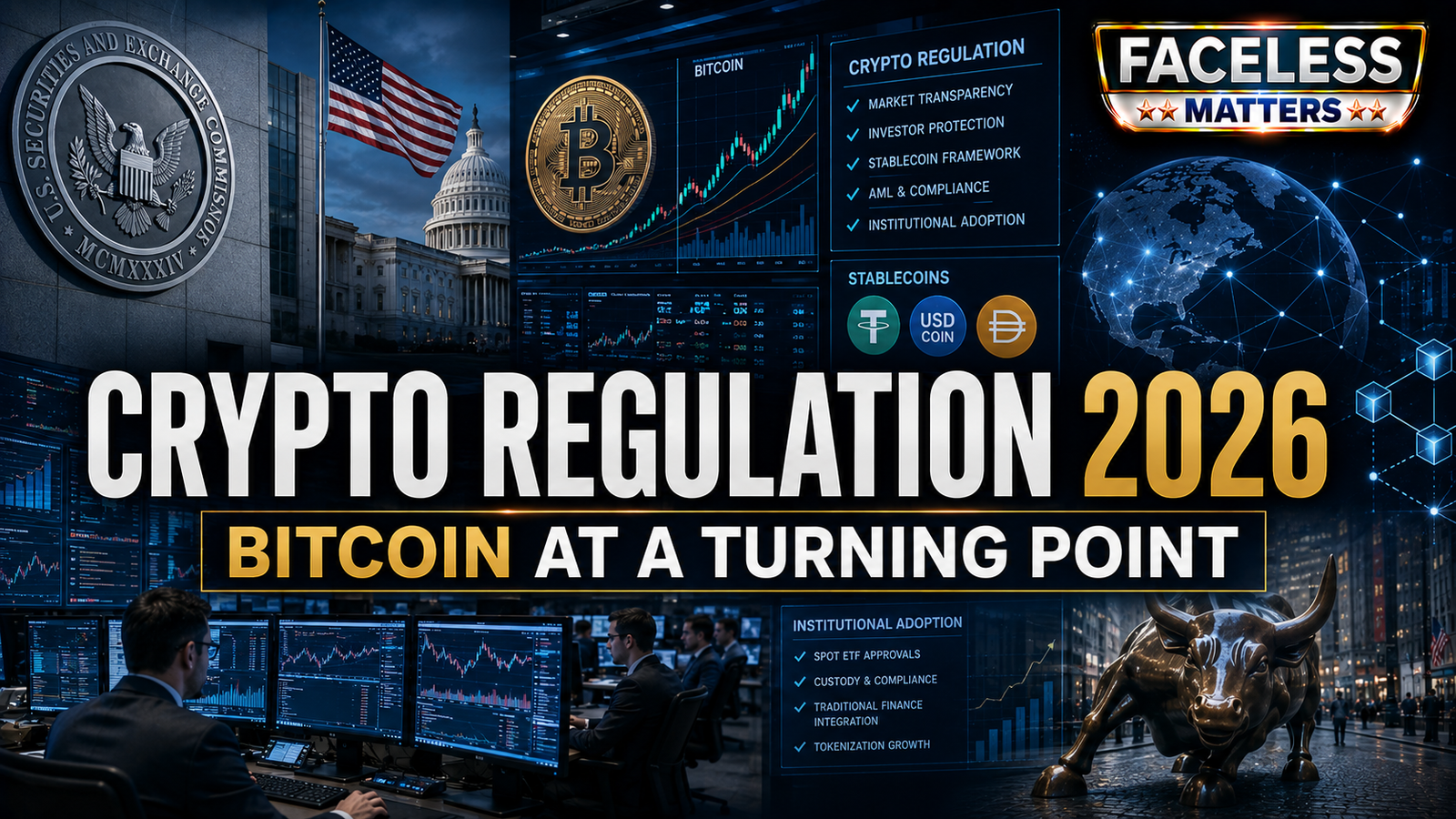
crypto regulation 2026
TABLE OF CONTENTS
The cryptocurrency industry is entering one of its most important regulatory phases in years.
The debate is no longer simply about whether governments should regulate Bitcoin and other digital assets. The more important question is what kind of regulatory framework will define the next stage of the crypto market.
On August 18, 2026, the U.S. Securities and Exchange Commission proposed a new framework aimed at creating clearer rules for crypto-asset offerings and certain token-related activities. The proposal includes exemptions that could make it easier for some crypto companies to raise capital, while also introducing disclosure and reporting requirements. Reuters
The development comes at a particularly important moment.
Bitcoin is trading around the mid-$60,000 range, while investors are watching U.S. interest rates, Treasury yields, institutional flows and regulatory developments simultaneously. Barron’s
At the same time, stablecoins are becoming increasingly important to the digital-asset economy, and the broader U.S. debate is moving toward questions of market structure, tokenization and the legal classification of different crypto assets.
The result is a market that could be entering a new phase: one in which regulatory clarity becomes almost as important as technology and liquidity.
Table of Contents
Why Crypto Regulation 2026 Matters
The SEC Is Moving Toward a New Crypto Framework
What the New Rules Could Mean for Token Projects
Bitcoin Faces a Different Regulatory Question
Stablecoins Are Becoming a Major Policy Issue
Why Market Structure Matters
Institutional Money and Crypto Regulation
The Risk of Regulatory Fragmentation
What Could Happen Next?
The Bigger Picture
What Investors Should Watch
Internal Reading
Source Verification & Analysis
Educational Note
1. Why Crypto Regulation 2026 Matters
Crypto regulation 2026 matters because the digital-asset industry is moving from an era dominated by regulatory uncertainty toward a more structured policy environment.
For years, crypto companies, exchanges and investors have faced uncertainty over how different tokens should be classified.
A token might function as a payment instrument, a digital commodity, a utility asset, a collectible or a tokenized financial product.
The regulatory treatment can therefore depend not only on the technology but also on how an asset is issued, marketed and used.
The SEC’s March 2026 interpretation already established a framework distinguishing several categories of crypto assets, including digital commodities, digital collectibles, digital tools, payment stablecoins and digital securities. SEC
The latest proposal could push that process further.
For the market, the key issue is predictability.
If businesses know which rules apply to them, they can make longer-term decisions about fundraising, product development, compliance and institutional partnerships.
If the rules remain uncertain, companies may delay investment or move parts of their operations to jurisdictions perceived as more predictable.
That makes regulation an economic issue as well as a legal one.
2. The SEC Is Moving Toward a New Crypto Framework
The SEC’s latest proposal represents a significant attempt to create tailored rules for parts of the crypto industry.
According to Reuters, the proposal includes a one-time exemption allowing certain token issuances of up to $5 million over four years and an annual exemption for offerings of up to $75 million, subject to disclosure and reporting requirements. Reuters
The proposal also includes a potential safe-harbor approach under certain conditions.
That could be important for smaller blockchain projects.
One of the biggest challenges facing emerging crypto companies has been the cost and uncertainty associated with complying with securities regulations.
A clearer pathway could allow legitimate projects to raise capital without immediately facing the same regulatory burden as large traditional financial institutions.
However, this does not mean the crypto market is becoming regulation-free.
The proposed framework still emphasizes disclosures and regulatory conditions.
That distinction is important.
The direction is toward clearer rules, not the absence of rules.
3. What the New Rules Could Mean for Token Projects
For blockchain startups, regulatory clarity can change the economics of launching a token.
A project that previously had to spend significant resources on legal uncertainty could potentially operate under a clearer framework.
This could encourage innovation in areas such as:
tokenized assets
blockchain infrastructure
decentralized applications
digital commodities
payment systems
financial technology
institutional blockchain services
However, investors should not assume that every token automatically receives the same treatment.
The SEC’s existing interpretation makes distinctions between different categories of crypto assets and transactions. SEC
The legal status of a token can depend on its characteristics and the circumstances surrounding its offering.
That means the next stage of the crypto market may reward projects with strong compliance systems rather than simply rewarding projects with aggressive marketing.
This could gradually change the character of the industry.
4. Bitcoin Faces a Different Regulatory Question
Bitcoin occupies a special position in the crypto market.
The central question for Bitcoin is less about whether the network can exist and more about how exchanges, investment products, institutions and financial intermediaries interact with it.
Bitcoin’s price remains highly sensitive to broader financial conditions.
On August 19, Bitcoin was reported around $64,000 after a retreat in U.S. equities and rising bond yields. Barron’s
This illustrates an important point.
Crypto is no longer operating independently of traditional markets.
Bitcoin increasingly reacts to:
Treasury yields
inflation expectations
Federal Reserve policy
institutional flows
equity-market sentiment
geopolitical risk
regulatory announcements
Coinbase’s August market-positioning research also showed that positioning in BTC and ETH had recovered from earlier de-risking, while ETF flows had improved and options positioning had shifted away from heavy downside protection. Coinbase
That suggests institutional and professional market participants are paying close attention to both regulation and macroeconomic conditions.
5. Stablecoins Are Becoming a Major Policy Issue
Stablecoins could become one of the most important areas of crypto regulation.
Unlike Bitcoin, stablecoins are generally designed to maintain a stable value relative to a reference asset, commonly the U.S. dollar.
That makes them particularly relevant to payments, settlement and tokenized financial markets.
The SEC’s educational material notes that payment stablecoins covered by the GENIUS Act are generally not treated as securities, subject to the law’s conditions. SEC
This distinction could become increasingly important as financial institutions explore blockchain-based settlement systems.
Stablecoins could potentially connect traditional finance with blockchain infrastructure.
They can be used for:
digital payments
settlement
transfers
trading
tokenized assets
decentralized finance
But their growth also creates questions around reserves, transparency, consumer protection and financial stability.
That means stablecoin regulation could become just as important as Bitcoin regulation for the future of the wider industry.
6. Why Market Structure Matters
The crypto market has historically operated across a fragmented collection of exchanges, intermediaries, decentralized protocols and financial products.
Market-structure rules could determine how responsibilities are divided between regulators and how different types of crypto businesses operate.
This is especially important for exchanges.
An exchange can provide trading infrastructure, custody services, staking products and access to multiple digital assets.
Each function can potentially raise different regulatory questions.
The proposed SEC framework is therefore part of a larger debate about how digital assets fit into the existing financial system.
The Senate’s Clarity Act also remains an important part of the broader U.S. regulatory discussion, with a vote expected after the August recess. Investor’s Business Daily
The outcome of that legislative process could ultimately determine how durable the regulatory framework becomes.
7. Institutional Money and Crypto Regulation
Institutional adoption is one of the strongest reasons regulatory clarity matters.
Large financial institutions generally operate under strict compliance requirements.
They need to understand:
custody rules
reporting obligations
market-abuse restrictions
asset classifications
disclosure requirements
counterparty risks
Clearer crypto regulation can therefore reduce one of the major barriers preventing larger institutions from expanding digital-asset activity.
Coinbase’s August research found that institutional positioning in major assets had improved, with ETH showing particularly strong improvement in several positioning indicators. Coinbase
That does not guarantee a new crypto bull market.
But it does show that professional market participants are increasingly treating digital assets as part of a broader financial allocation framework.
The next stage may therefore be less about convincing institutions that crypto exists and more about determining how institutions can participate safely and legally.
8. The Risk of Regulatory Fragmentation
There is another side to the regulatory story.
If different U.S. agencies, states and international jurisdictions establish conflicting rules, companies could still face significant uncertainty.
A global crypto company may need to comply with several regulatory regimes simultaneously.
That can increase:
legal costs
compliance expenses
operational complexity
market fragmentation
It could also encourage companies to structure their operations around jurisdictions with clearer rules.
For investors, regulatory fragmentation could make certain assets more difficult to access or list.
Therefore, the success of crypto regulation will depend not only on creating rules but also on creating consistent and understandable rules.
9. What Could Happen Next?
Several developments could shape the next phase of the market.
First, the SEC’s proposal will go through a public-comment process. Reuters reported that the proposal has a 60-day comment period. Reuters
Second, lawmakers will continue debating broader digital-asset market-structure legislation.
Third, the White House’s August 19 meeting with crypto executives and financial-industry participants could increase attention on the direction of U.S. crypto policy. Reuters
Fourth, the implementation of stablecoin legislation will become increasingly important as the GENIUS Act moves toward its January 2027 effective date. Investor’s Business Daily
Finally, investors will continue watching whether regulatory progress translates into stronger institutional participation.
The key point is that regulation itself does not guarantee higher prices.
Investors following crypto regulation 2026 should focus on SEC rulemaking, market-structure legislation and stablecoin implementation.
It can improve market structure, but Bitcoin and other assets will still depend on liquidity, economic conditions, demand and investor expectations.
10. The Bigger Picture
The cryptocurrency industry may be approaching a transition point.
The first major phase of crypto was largely about creating decentralized technology.
The second phase focused heavily on speculation, exchange growth and retail adoption.
The next phase could increasingly focus on integration with mainstream finance.
Crypto regulation 2026 could shape the next stage of digital-asset market development by influencing institutional participation, compliance standards and long-term market structure.
That integration requires rules.
Banks need compliance frameworks.
Asset managers need custody standards.
Companies need fundraising pathways.
Investors need disclosures.
Governments need mechanisms to address fraud and financial risk.
This is why crypto regulation 2026 could become more important than any single Bitcoin price target.
If policymakers create a framework that allows innovation while maintaining investor protection, the industry could gain a stronger foundation for long-term growth.
If regulation becomes fragmented or excessively restrictive, some activity could move elsewhere.
The balance will matter.
11. What Investors Should Watch
Investors should focus on developments rather than headlines.
1. SEC rulemaking
Watch how the proposed framework changes during the public-comment process.
2. Market-structure legislation
The Clarity Act and related congressional negotiations could materially affect the industry’s future. Investor’s Business Daily
3. Stablecoin implementation
Stablecoin rules could influence payment networks, exchanges and tokenized finance.
4. Bitcoin ETF flows
ETF flows remain an important indicator of institutional demand.
5. Treasury yields
Bitcoin remains sensitive to broader liquidity and risk conditions.
6. Ethereum positioning
Coinbase’s August research showed improving ETH positioning, making ETH an important indicator of whether risk appetite is expanding beyond Bitcoin. Coinbase
7. Institutional adoption
The most meaningful long-term signal may be whether banks, asset managers and payment companies continue increasing their blockchain exposure.
CONCLUSION
Crypto regulation 2026 is becoming a defining issue for the digital-asset industry.
The latest SEC proposal suggests that U.S. regulators are attempting to move toward clearer and more specialized rules rather than relying entirely on traditional securities frameworks. Reuters
For Bitcoin, the implications are closely tied to institutional access, market liquidity and the broader financial environment.
For stablecoins, the stakes may be even broader because they could become an important bridge between blockchain networks and traditional payment infrastructure.
For crypto startups, clearer rules could lower uncertainty around fundraising and development.
But regulation will not eliminate market risk.
Crypto assets will continue to experience volatility, and investors will still need to consider liquidity, valuation, technology, custody and macroeconomic conditions.
The larger story is therefore not simply whether governments are becoming more friendly toward cryptocurrency.
It is whether the industry can transition from a largely experimental financial ecosystem into a more mature market with clear rules, institutional participation and sustainable infrastructure.
That transition has already begun.
The question now is how far it will go.
For investors and crypto businesses, crypto regulation 2026 will remain an important factor to watch as regulators, institutions and market participants adapt to a changing digital-asset environment.
Reuters — U.S. securities regulator proposes new crypto rules, August 18–19, 2026.
U.S. Securities and Exchange Commission — Crypto Assets and the Federal Securities Laws, 2026.
U.S. Securities and Exchange Commission — Application of Federal Securities Laws to Certain Types of Crypto Assets, March 2026.
Coinbase Institutional — Crypto Market Positioning, August 2026.
Barron’s — Bitcoin market reaction to U.S. equities and Treasury yields, August 19, 2026.
Investors Business Daily — SEC crypto regulation and Clarity Act developments, August 2026.
Associated financial-market reporting — Bitcoin price and macroeconomic conditions, August 2026.
FACELESS MATTERS — Existing economic and technology coverage for internal contextual linking.
EDUCATIONAL NOTE
This article is for informational and educational purposes only. It does not constitute financial, investment, legal or tax advice. Cryptocurrency markets are highly volatile and digital assets can experience substantial losses. Readers should conduct independent research and consider professional advice before making financial decisions.
FACELESS MATTERS is an independent digital media and information platform focused on technology, artificial intelligence, business, economy, Pakistan, current affairs, strategic analysis and emerging trends. Our mission is to provide informative, responsible and research-based content that helps readers understand important developments in Pakistan and around the world. FACELESS MATTERS values accuracy, transparency, responsible journalism and reader awareness.