

TABLE OF CONTENTS
The United States and South Korea are facing a new security debate after President Donald Trump ordered a significant reduction in their joint military drills, putting fresh attention on alliance coordination, deterrence and the future of defense planning on the Korean Peninsula. South Korean officials said they were caught off guard by the decision, adding an unusual layer of uncertainty to an alliance that has long relied on regular exercises to maintain operational readiness.
The development is unfolding during the annual Ulchi Freedom Shield exercise, a major combined training framework designed to strengthen the ability of U.S. and South Korean forces to respond to a range of security threats. U.S. Forces Korea describes the exercise as a combined, joint, all-domain and interagency environment involving military and government organizations from both countries.
The latest changes to US South Korea Military Drills in 2026 have raised fresh questions about alliance coordination, deterrence and military readiness in East Asia.
The immediate question is not simply whether fewer drills will take place.
The larger question is what the change says about the future of the U.S.–South Korea alliance.
1. Why the US South Korea Military Drills Matter
Joint military exercises are more than demonstrations of military power.
They are opportunities for commanders, service members and support organizations to practice how they would operate together during a crisis.
That includes communications, command structures, logistics, intelligence sharing, cyber coordination and the movement of forces.
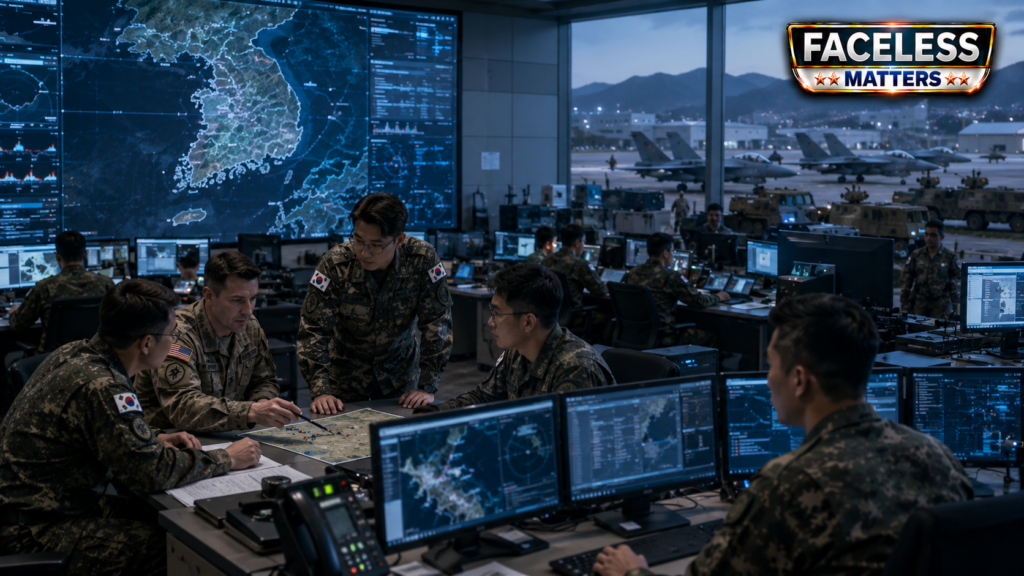
The US South Korea Military Drills also provide an important test of joint readiness, command coordination and crisis response.
U.S. Forces Korea says Ulchi Freedom Shield is designed to strengthen the combined defense posture and improve alliance response capabilities across different security threats. The exercise includes live, virtual, constructive and field-based training.
That structure is particularly important on the Korean Peninsula because operational conditions can change rapidly.
For an alliance, readiness is not maintained simply by owning advanced weapons.
It depends on whether people, systems and commanders can work together when communications are disrupted, when units are moved quickly and when decisions must be made under pressure.
That is why changes to military drills can become a strategic issue even when no military conflict is taking place.
2. Trump’s Decision Changes the Immediate Security Calculation
The latest development places political decision-making directly alongside military planning.
Reuters reported on August 19 that South Korean Foreign Minister Cho Hyun told lawmakers that South Korean and U.S. officials were caught off guard by Trump’s decision to reduce the joint exercises. According to the minister, neither government had prior knowledge of the directive.
That detail matters.
Military alliances depend not only on weapons and troops but also on communication and confidence between governments.
When a major change is announced without advance coordination, allies may have to reassess how future decisions will be made.
For South Korea, this creates a delicate balance.
Seoul has an interest in maintaining strong national defense capabilities while also managing relations with North Korea and preserving the U.S. security relationship.
For Washington, the decision reflects a broader debate over the cost, purpose and strategic value of large-scale military exercises.
The result is a new discussion about whether alliance modernization means conducting fewer exercises, changing their format, or shifting resources toward other capabilities.
The future of US South Korea Military Drills will depend on how effectively both allies preserve operational readiness despite changing exercise schedules.
3. Ulchi Freedom Shield Is Built Around More Than Combat Drills
The exercise is sometimes discussed publicly as a military drill, but the underlying structure is broader.
U.S. Forces Korea says the exercise incorporates combined and interagency operations and is intended to strengthen alliance response capabilities.
US South Korea Military Drills are designed to test how both militaries coordinate command, communications, logistics and operational planning during a potential crisis.
That makes the exercise relevant to:
Command and control
Communications
Logistics
Cyber operations
Government coordination
Military mobility
Emergency response
Combined decision-making
These capabilities are difficult to build quickly.
A military alliance can buy advanced aircraft and missile-defense systems, but operational effectiveness still depends on whether personnel know how those systems fit into a wider command structure.
This is one reason defense analysts pay attention to the scale and frequency of joint exercises.
4. North Korea Remains the Central Security Factor
The Korean Peninsula remains one of the world’s most closely watched security environments.
North Korea’s military capabilities remain at the center of U.S. and South Korean defense planning, which means changes in exercises can have consequences beyond the training schedule itself.
The strategic calculation is straightforward.
If joint exercises become smaller or less frequent, the allies may need other methods to maintain readiness.
Those could include:
more simulation-based training,
smaller field exercises,
advanced command-and-control systems,
greater use of distributed operations,
stronger intelligence-sharing mechanisms,
and increased investment in surveillance and missile-defense capabilities.
This does not automatically mean South Korea becomes less secure.
It does, however, mean the balance between exercise-based readiness and technology-based readiness becomes more important.
5. The Alliance Is Also Facing a Trust Question
One of the most important elements of the current story is not the number of exercises.
It is trust.
South Korea’s foreign minister said the government was surprised by the decision.
That can create questions about how closely Washington and Seoul are coordinating on future defense policy.
A mature alliance must be able to handle disagreements.
But it also needs mechanisms that allow major strategic decisions to be discussed before they become public.
This is particularly important for South Korea because the country operates in immediate proximity to North Korea.
For Seoul, defense planning is not an abstract geopolitical exercise.
It is tied directly to national security, military readiness and the credibility of deterrence.
6. What the Cut Could Mean for Military Readiness
The practical impact will depend on what is reduced and what replaces it.
Any reduction in US South Korea Military Drills therefore needs to be assessed not only by the number of exercises removed, but also by the quality of the training that remains.
The Associated Press reported that the exercise is primarily a computer-simulated command-post exercise involving roughly 18,000 South Korean troops, while field training was also part of the planned activity. AP reported that 14 field drills had been planned and were expected to be reduced after Trump’s decision.
That distinction is important.
A reduction in large field exercises does not necessarily eliminate all military training.
It can instead shift the training mix.
For example, military organizations could place greater emphasis on:
virtual simulation,
command-post exercises,
specialized field training,
drone operations,
air-defense exercises,
cyber preparedness,
and rapid-response scenarios.
The challenge is that some forms of readiness cannot be completely replicated on a computer.
Moving real units, coordinating real communications networks and operating alongside partner forces generate practical experience that simulation cannot always reproduce.
7. Why Seoul May Still Have Room to Adapt
South Korea is not solely dependent on the U.S. military for its own defense.
The country has a highly developed military establishment, advanced technology industries and significant domestic defense capabilities.
South Korea has also been pursuing greater national responsibility for its own security.
That means the debate could ultimately accelerate a broader transformation.
Instead of asking only:
How many joint drills should the United States and South Korea conduct?
The more important question may become:
How should the alliance divide responsibilities between American support and South Korean capability?
That could influence future investment in intelligence, surveillance, aerospace, missile defense, unmanned systems, cyber capabilities and domestic defense production.
8. The Strategic Signal to North Korea
The decision also creates a messaging problem.
Military exercises are intended partly to demonstrate preparedness.
Reducing them can therefore be interpreted in different ways.
One interpretation is diplomatic.
A smaller exercise schedule may reduce tensions and create more space for engagement with North Korea.
Another interpretation is strategic.
Critics may argue that scaling back exercises could weaken deterrence if Pyongyang believes allied readiness is declining.
Reuters reported that the drills are viewed as an important part of the U.S.–South Korean alliance and deterrence posture.
The actual effect will depend partly on how North Korea responds.
Words alone will not determine the outcome.
Military behavior, intelligence assessments and future exercises will be more important indicators.
9. The Bigger Indo-Pacific Question
The story extends beyond the Korean Peninsula.
The United States is managing multiple strategic commitments across the Indo-Pacific while simultaneously dealing with competing global security demands.
That makes resource allocation increasingly important.
When military exercises are reduced in one theater, analysts naturally ask where personnel, equipment, logistics and funding will be concentrated instead.
This is why the U.S. South Korea military drills decision can matter to countries far beyond Seoul and Pyongyang.
Japan, Australia and other U.S. partners across the Indo-Pacific are likely to watch how Washington balances alliance commitments, military readiness and strategic priorities.
The issue is therefore part of a much larger debate over America’s future security architecture in Asia.
10. What Happens Next?
Several indicators will be important over the coming weeks.
First, analysts will watch whether Washington and Seoul establish a more formal process for future exercise decisions.
Future US South Korea Military Drills may therefore place greater emphasis on high-value training, simulation and rapid-response capabilities.
The future of US South Korea Military Drills will depend on whether Washington and Seoul can maintain effective readiness through a different mix of field training, simulation and combined exercises.
Second, attention will turn to whether field training remains reduced or is later restored.
Third, observers will watch North Korea’s military and diplomatic response.
Fourth, the alliance will face a practical question:
How can it maintain high readiness while conducting fewer large-scale exercises?
The US South Korea Military Drills remain important because they show how the alliance can adapt readiness, training and deterrence to a changing security environment.
The answer could involve a more technology-heavy military training model.
It could also involve smaller but more frequent exercises.
Or the alliance could eventually return to a larger training schedule if security conditions deteriorate.
At this point, the confirmed development is the reduction in joint exercises and the political disagreement surrounding the way that decision was made.
The next phase of US South Korea Military Drills will therefore be closely watched for changes in training scale, operational readiness and alliance coordination.
The Bigger Picture
The U.S. South Korea military drills decision is ultimately about more than one annual exercise.
It is about the future shape of a major security alliance.
The United States and South Korea have built decades of military cooperation around the idea that readiness depends on combined planning, training and communication.
Changing that model may reduce costs and potentially create diplomatic opportunities.
For US South Korea Military Drills, the central issue is therefore whether a smaller exercise footprint can still preserve credible deterrence.
But it also creates a new requirement:
The alliance must demonstrate that reduced exercises do not automatically mean reduced readiness.
That will depend on technology, intelligence, planning, domestic defense capabilities and, above all, trust between the two governments.
The Korean Peninsula will therefore remain an important test of how modern alliances adapt to political change.
INTERNAL READING
For more analysis from FACELESS MATTERS, explore our related coverage on Pakistan, technology, business, the digital economy and strategic developments. These stories provide additional context for readers following major geopolitical and economic trends.
1 — Pakistan Digital Economy Initiative 2026: Powerful Digital Growth
2 — Pakistan Independence Day 2026: Courage, Sacrifice & Unity
3 — The Role of Institutions and Citizens in Ending Pakistan Terrorism
4 — The AI Infrastructure Boom: Nvidia, OpenAI and the Global Race for Data Centers, Chips and Power
SOURCE VERIFICATION & ANALYSIS
Reuters — South Korea says officials were caught off guard by Trump’s order to reduce military drills, August 19, 2026.
Associated Press — Analysis of the role of the reduced drills in the U.S.–South Korea alliance and deterrence, August 19, 2026.
U.S. Forces Korea — Official description and purpose of Ulchi Freedom Shield as a combined, joint, all-domain and interagency exercise.
Yonhap — U.S. military description of the 2026 exercise focus on alliance modernization and Northeast Asian security, August 14, 2026.
The Wall Street Journal — Reporting on the scaling back of the exercise and its strategic implications, August 19, 2026.
The Guardian — Analysis of Seoul’s concerns about the alliance and the strategic implications of the decision, August 19, 2026.
EDUCATIONAL NOTE
This article is provided for informational, educational and geopolitical analysis purposes only. It does not represent military, political, legal or security advice. International security developments can change rapidly, and readers should consult current official statements and multiple credible sources when evaluating major developments.
[…] US South Korea Military Drills 2026: Security Risks — This FACELESS MATTERS defence analysis provides wider context on military readiness, alliance coordination, joint exercises and the strategic importance of interoperability in modern security partnerships. Read the defence analysis […]