

Date: September 17, 2026

Key Takeaway
The latest Asim Munir Iran contact brings Pakistan and Iran back into focus as regional diplomatic activity intensifies.
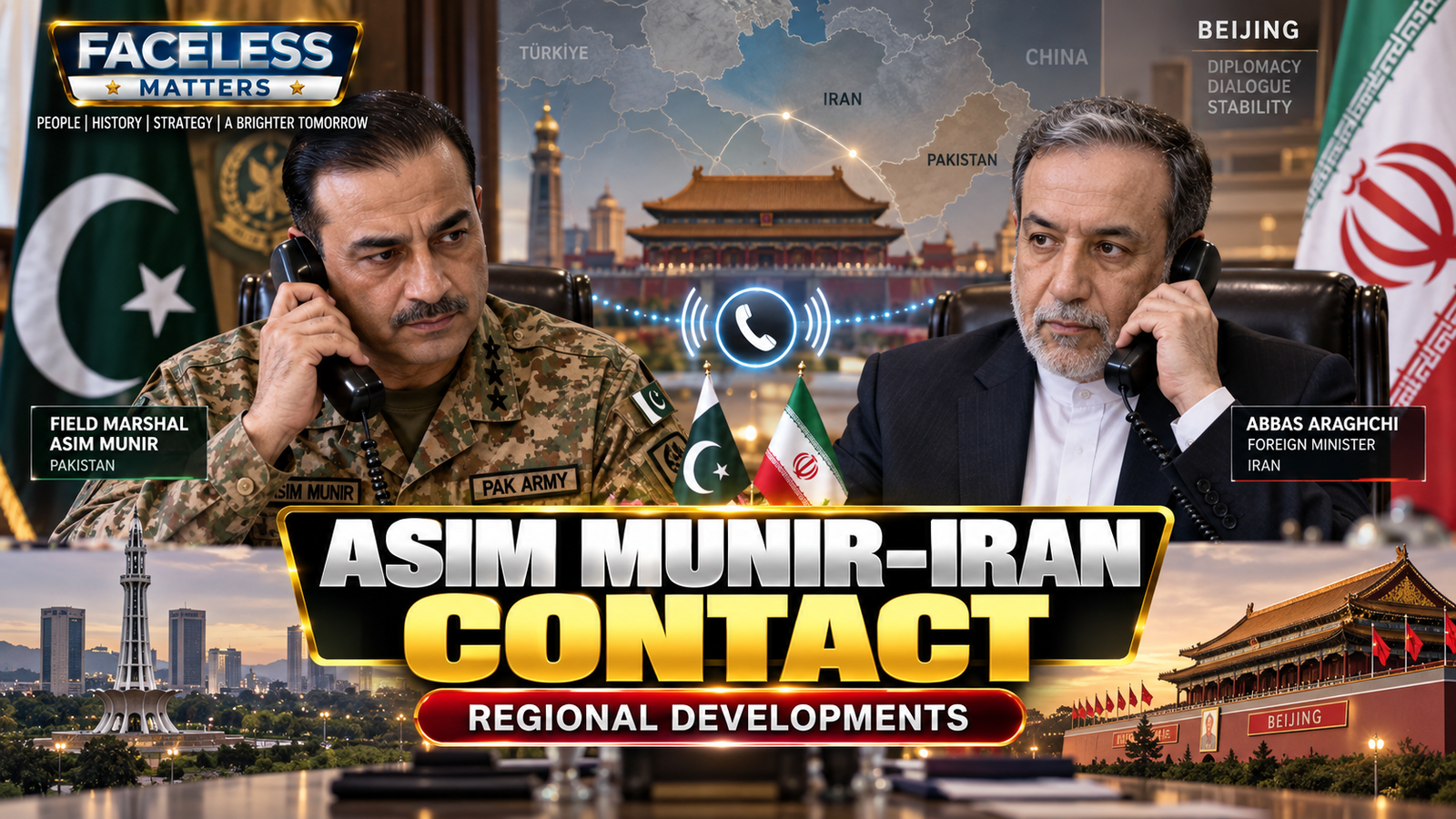
Iranian Foreign Minister Abbas Araghchi spoke by telephone with Field Marshal Asim Munir while Araghchi was in Beijing. Iranian government reporting said the two discussed the latest regional developments and matters of mutual interest between Iran and Pakistan.
The conversation comes alongside wider diplomatic activity involving Iran, China and other regional states. During his Beijing visit, Araghchi also met Chinese Foreign Minister Wang Yi, with discussions focused on regional stability and the need to avoid further escalation.
For Pakistan, the significance lies not only in the telephone call itself but also in the broader diplomatic environment surrounding it.
Article Content
What Happened?
On September 17, 2026, Iranian Foreign Minister Abbas Araghchi held a telephone conversation with Field Marshal Asim Munir while Araghchi was in Beijing.
Iranian government reporting, as cited by multiple Pakistani news outlets, said the conversation covered the latest regional developments and matters of mutual interest between Iran and Pakistan.
Jang also reported that the conversation took place during Araghchi’s China visit and that regional developments and bilateral matters were discussed.
The available reporting does not provide a detailed transcript of the conversation. Therefore, specific subjects beyond the reported regional developments and matters of mutual interest should not be presented as confirmed discussion points.
That distinction matters.
The contact is nevertheless significant because it occurred during a period of heightened regional diplomatic activity involving Iran, China, Pakistan and other Middle Eastern states.
Why the Contact Matters
The latest Asim Munir Iran contact is part of a wider pattern of high-level communication between Tehran and Islamabad.
Pakistan’s Foreign Office has previously described Islamabad’s engagement with Iran as part of wider efforts involving dialogue, diplomacy and regional de-escalation. In an earlier official briefing, the Foreign Office said Field Marshal Asim Munir’s August visit to Tehran formed part of Pakistan’s diplomatic efforts surrounding the US-Iran crisis and regional stability.
That means the latest telephone conversation should be understood within an established diplomatic context rather than as an isolated event.
At the same time, there is not enough public information to conclude that the call produced a new agreement or specific diplomatic breakthrough.
The confirmed development is the communication itself.
1. Signal One: Regional Developments Remain the Priority
The first signal from the Asim Munir Iran contact is the continued focus on regional developments.
The Iranian government’s reported description of the conversation is deliberately broad. It refers to the latest regional developments and matters of mutual interest rather than announcing a specific agreement.
That wording leaves room for several regional issues to remain under discussion, but those issues should not be presented as confirmed subjects unless the governments release further details.
What is clear is that the conversation took place during a period of intensive diplomatic activity.
Araghchi’s Beijing visit itself demonstrates that Iran is maintaining communication with major regional and international partners while the security environment remains unsettled.
For Pakistan, maintaining direct communication with Tehran provides an established channel through which regional developments can be discussed.
2. Signal Two: Pakistan-Iran Communication Remains Active
The second signal is continuity.
Pakistan and Iran share a long border, extensive historical ties and direct security and economic interests.
Their relationship is therefore affected by developments not only between Islamabad and Tehran but also by wider changes across the Middle East.
The latest Asim Munir Iran communication shows that senior-level contact remains active.
This is particularly relevant because Pakistan has repeatedly emphasized dialogue and diplomacy in dealing with regional crises.
The Foreign Office has previously stated that Islamabad remains engaged with regional partners and has highlighted the importance of diplomacy, restraint and negotiated solutions.
The current call does not by itself establish a new Pakistani policy.
It does, however, demonstrate that direct communication between senior Pakistani and Iranian officials continues.
3. Signal Three: China Adds a Wider Diplomatic Dimension
The third signal comes from the timing of the call.
Araghchi was in Beijing when he spoke with Field Marshal Asim Munir. Iranian reporting and Pakistani coverage both identify the China visit as the setting for the conversation.
During the same visit, Araghchi met Chinese Foreign Minister Wang Yi.
According to reporting on the meeting, China urged Washington and Tehran to avoid further escalation and return to meaningful negotiations. Wang also expressed concern about the possibility of instability spreading further across the region.
This places the Asim Munir Iran call inside a broader diplomatic sequence.
The immediate call involved Pakistan and Iran.
The surrounding diplomacy involved China, Iran and the wider regional security environment.
That does not mean the three countries have adopted a common policy. The available evidence does not establish such an agreement.
It does show, however, that regional diplomacy is occurring through multiple overlapping channels.
4. Signal Four: Energy and Security Remain Connected
Regional security has an economic dimension.
Pakistan is heavily exposed to changes in international energy prices because oil imports affect the country’s transport costs, import bill and inflationary pressures.
The wider regional situation also matters because instability around important maritime routes can affect shipping and energy markets.
FACELESS MATTERS has previously examined the connection between regional instability, the Strait of Hormuz and Pakistan’s energy exposure. Recent coverage of Pakistan’s energy environment has also highlighted the relationship between global oil-market volatility, LNG exposure and domestic energy costs.
The latest Asim Munir Iran communication should therefore be viewed partly through an economic-security lens.
Diplomatic engagement cannot guarantee lower energy prices.
But sustained regional communication can matter when governments are trying to reduce the risk of wider escalation.
5. Signal Five: Pakistan’s Diplomatic Space
The fifth signal concerns Pakistan’s position.
Islamabad maintains important relationships with Iran, Saudi Arabia, China, Türkiye and other regional and international partners.
That gives Pakistan multiple diplomatic channels, but it also creates a requirement for careful balancing.
Pakistan’s Foreign Office has publicly described its approach as supporting dialogue, diplomacy and regional stability.
The latest Asim Munir Iran contact therefore fits into a broader pattern in which Pakistan seeks to remain engaged with neighboring and regional states during periods of uncertainty.
The public evidence does not establish that Pakistan is mediating a specific new agreement through this call.
It does establish continued high-level communication.
That distinction is important for accurate reporting.
What Happens Next?
The next developments should be assessed through confirmed actions rather than assumptions.
1. Further Iran-Pakistan Contacts
Additional calls or meetings could provide more information about the direction of bilateral consultations.
2. Iran-China Diplomacy
Araghchi’s discussions in Beijing may provide further indications of Tehran’s regional diplomatic priorities.
3. Regional De-escalation
Any concrete reduction in military tensions would affect the wider diplomatic environment.
4. Energy and Shipping
Developments around regional maritime routes could affect Pakistan through oil prices, freight costs and external financing pressures.
5. Official Statements
The most important next step for assessing the latest Asim Munir Iran contact will be additional information from the governments themselves.
What It Means for Pakistan
For Pakistan, the immediate importance of the development is communication.
Iran is a neighboring country with direct implications for Pakistan’s border security, trade, energy environment and regional diplomacy.
At the same time, Pakistan has substantial relationships with Gulf states and other international partners.
A stable regional environment is therefore directly relevant to Pakistan’s economic and security interests.
Pakistan’s official diplomatic statements have repeatedly emphasized dialogue and regional stability.
The latest call does not establish that a major agreement has been reached.
Its significance is more straightforward: senior-level communication between Pakistan and Iran continues at a time when regional diplomacy remains active.
FACELESS MATTERS Analysis
The most important point about the latest telephone contact is not to overstate what has been publicly confirmed. The available evidence should remain the basis for assessing its significance and wider regional context.
The confirmed facts are limited but meaningful.
Iranian Foreign Minister Abbas Araghchi spoke with Field Marshal Asim Munir while visiting Beijing.
The two sides discussed the latest regional developments and matters of mutual interest.
Araghchi was simultaneously engaged in diplomacy with China.
Pakistan remains publicly committed to dialogue and diplomatic engagement in the wider regional crisis.
What remains unknown is equally important.
There is no publicly available detailed transcript establishing every issue discussed during the call.
There is also no public evidence in the cited reports of a new bilateral agreement resulting directly from the conversation.
Therefore, the most evidence-based interpretation is that the call represents continued high-level Pakistan-Iran consultation during a period of significant regional uncertainty.
That is important in its own right.
For Pakistan, the value of maintaining communication channels is particularly relevant because developments in Iran can quickly affect border security, energy markets and regional diplomacy.
The next stage will be measured by what governments actually do after the contact.
Conclusion
The latest Asim Munir Iran telephone contact highlights the continuing importance of Pakistan-Iran communication as regional diplomatic activity intensifies.
Iranian Foreign Minister Abbas Araghchi spoke with Field Marshal Asim Munir during his visit to Beijing, with the two sides discussing regional developments and matters of mutual interest.
The call took place alongside wider diplomatic engagement involving Iran and China, while Pakistan continues to emphasize dialogue and regional stability in its official statements.
At this stage, the evidence supports describing the call as an important high-level diplomatic contact—not as proof of a new agreement or confirmed breakthrough.
The next developments will show whether this communication leads to further consultations, practical cooperation or additional diplomatic activity.
INTERNAL READING — FACELESS MATTERS
Asim Munir Pezeshkian Meeting 2026: 5 Powerful Diplomatic Developments
Iran Saudi Arabia: 5 Critical Signals Behind War Claims
Pezeshkian Saudi Arabia: 5 Key Signals for Regional Peace
Pezeshkian Regional Peace: Hope for West Asia in 2026
Iran China Security Proposal: 5 Critical Signals Behind Tehran’s Regional Security Message
Pakistan Energy 2026: 5 Critical Signals From Power Costs, LNG and Global Oil Markets
Pakistan Oil Crisis: 5 Proven Lessons From Iran War
World News 2026: 4 Major Global Risks to Watch
SOURCES & EDITORIAL NOTE
Jang — September 17, 2026
Reports that Iranian Foreign Minister Abbas Araghchi held a telephone conversation with Field Marshal Syed Asim Munir during his visit to China. According to the report, the two discussed recent regional developments and matters of mutual interest between Iran and Pakistan.
Dunya News — September 17, 2026
Reports that Araghchi spoke with Field Marshal Asim Munir while in Beijing and that the discussion covered the latest regional developments and issues of mutual interest. It also provides context on Araghchi’s talks with Chinese Foreign Minister Wang Yi and regional de-escalation efforts.
Daily Pakistan — September 17, 2026
Reports the Iranian government’s account of the telephone contact and confirms that it took place during Araghchi’s Beijing visit, with regional developments and Iran-Pakistan matters of mutual interest discussed.
Pakistan Ministry of Foreign Affairs — September 2, 2026 Press Briefing
Provides official Pakistani context on Islamabad’s diplomatic engagement surrounding Iran, including Pakistan’s stated support for restraint, dialogue and sustained diplomacy, as well as Field Marshal Syed Asim Munir’s earlier visit to Iran as part of Pakistan’s diplomatic efforts.
Editorial Note
FACELESS MATTERS distinguishes between confirmed official statements, attributed media reporting and editorial analysis. The sources reviewed confirm the telephone contact between Iranian Foreign Minister Abbas Araghchi and Field Marshal Syed Asim Munir and confirm that regional developments and matters of mutual interest were discussed. However, the publicly available reports do not provide a complete transcript of the call. Therefore, FACELESS MATTERS does not present additional specific discussion points as confirmed unless supported by an official statement or reliable reporting.