

TABLE OF CONTENTS
Pakistan’s fuel market has entered another important phase as petrol and high-speed diesel prices rise again. From September 4, petrol is priced at Rs349 per litre, while high-speed diesel has reached Rs374.31 per litre after increases of Rs2.84 and Rs2.28 respectively. The latest revision follows another increase announced just one day earlier, highlighting how quickly international energy-market conditions are being transmitted into domestic prices.
Daily Jang had already reported on September 3 that petrol had risen to Rs346.16 and high-speed diesel to Rs372.03. The subsequent revision means businesses and consumers are now dealing with another layer of fuel-cost pressure within a rapidly changing market environment.
The Pakistan Petrol Price story, however, is bigger than the number displayed at a filling station.
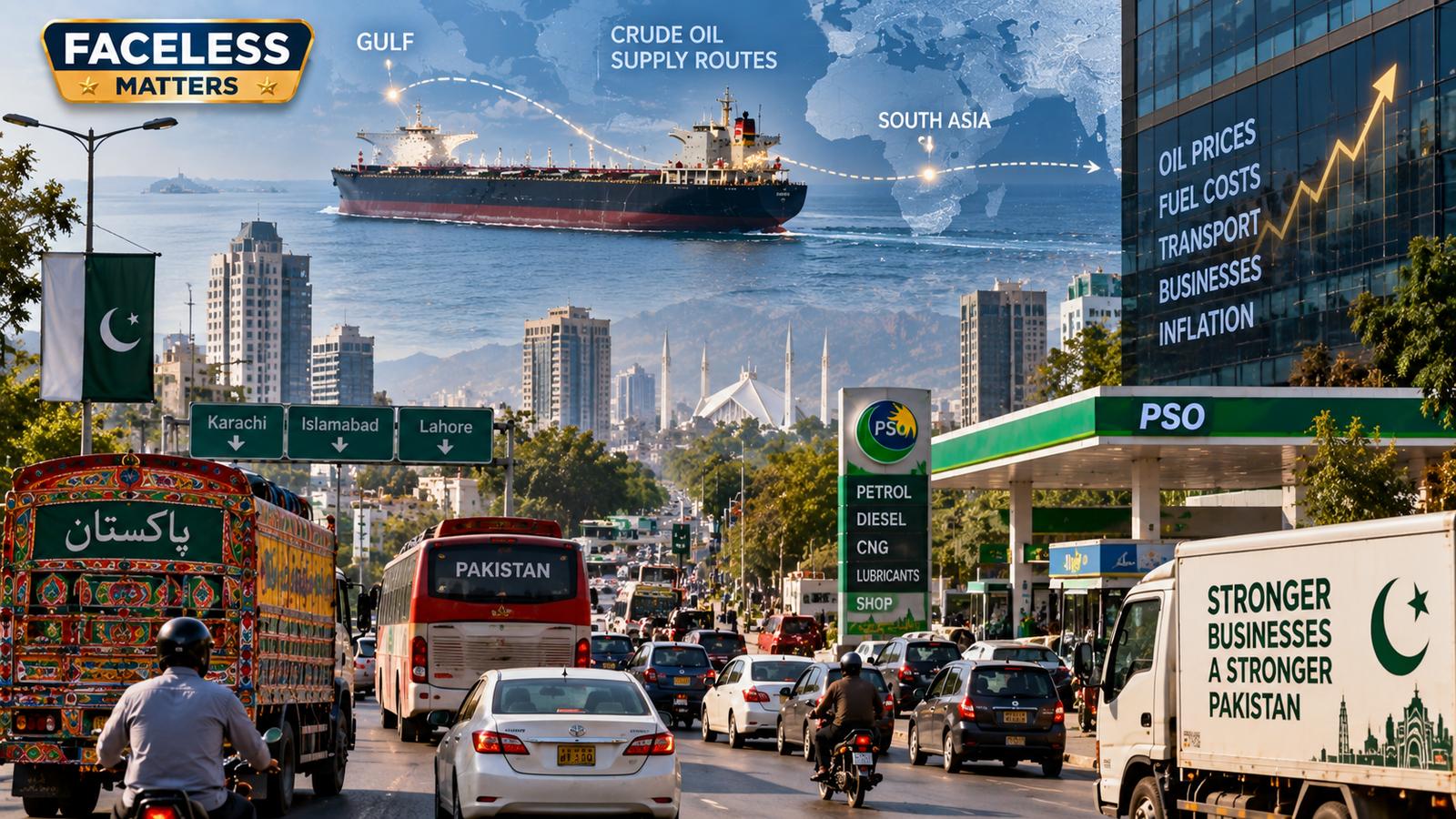
Fuel prices influence transportation, logistics, agriculture, manufacturing, retail, household budgets, inflation expectations and ultimately business confidence. At the same time, global crude prices are being affected by renewed US-Iran tensions and disruption risks around the Strait of Hormuz. Reuters reported on September 4 that Brent crude was around $95.67 a barrel and on course for its strongest weekly gain since mid-July.
This creates a complicated business environment for Pakistan.
What Changed in Pakistan’s Fuel Prices?
The latest official revision places petrol at Rs349.00 per litre and high-speed diesel at Rs374.31 per litre. Petrol increased by Rs2.84, while diesel rose by Rs2.28. The new rates took effect from September 4.
The Petroleum Division is simultaneously reviewing how fuel pricing works. On September 3, the Petroleum Pricing Committee discussed reforms aimed at making the pricing framework more transparent and predictable. It also approved guiding principles for possible emergency intervention in diesel pricing and discussed a likely June 2027 target for petrol deregulation.
That combination is significant for the Pakistan Petrol Price outlook. Businesses need to understand whether current increases are temporary reactions to global energy volatility or part of a longer period of elevated operating costs. The distinction matters because companies make pricing, inventory, transport and investment decisions based on expected costs rather than on one isolated fuel-price announcement.
Pakistan is facing a difficult balance between market-linked pricing and consumer protection. A fully market-driven system can transmit global volatility quickly, while excessive intervention can create fiscal and supply-management pressures.
The Pakistan Petrol Price mechanism is therefore becoming an important part of the country’s broader economic-policy debate.
Why Global Oil Markets Matter
Pakistan does not determine international crude prices.
Global oil prices respond to geopolitics, production levels, inventories, shipping conditions, refinery demand, sanctions, currency movements and expectations about future supply.
At present, the international environment is particularly sensitive.
Reuters reported that Brent crude was around $95.67 on September 4, with a weekly increase of about 7.1%. The rise was linked partly to renewed US-Iran tensions and concerns over energy supply disruption in the Middle East.
The significance for Pakistan is straightforward, because the Pakistan Petrol Price can transmit international energy-market pressure into domestic business costs. When crude prices remain elevated, importers, transport operators and manufacturers may need to revise their budgets. If the rupee also weakens, the combined pressure can become more difficult for businesses to absorb.
If international crude becomes more expensive, the cost of importing petroleum products can rise. If the Pakistani rupee simultaneously comes under pressure against the dollar, the local-currency cost can increase further.
This creates a double exposure:
global oil price + exchange-rate pressure = higher domestic energy risk
That is why the Pakistan Petrol Price cannot be analysed independently from global energy markets.
Risk One: Transport and Logistics Costs
The first major business risk is transportation.
Petrol directly affects private motorists, motorcycles, ride-hailing services and many smaller commercial operations. Diesel has an even wider industrial significance because it is heavily used by trucks, buses, agricultural machinery, generators and other commercial equipment.
When diesel becomes more expensive, logistics companies must reassess operating costs.
A trucking company may face higher fuel expenses on every route.
A distributor may have to reconsider delivery charges.
A manufacturer may see the cost of moving raw materials increase.
A retailer may face higher costs for bringing goods from warehouses to stores.
These costs do not always appear immediately in consumer prices. Businesses may initially absorb part of the increase to protect market share.
But sustained increases become harder to absorb.
The Pakistan Petrol Price therefore acts as an input cost across multiple layers of the domestic economy rather than affecting only motorists. For businesses, the impact can accumulate through procurement, warehousing, distribution and final delivery. Companies with thin margins may have less room to absorb higher operating expenses, while larger firms may adjust pricing, contracts or logistics. This makes fuel costs an important business-planning variable.
Risk Two: Inflation Pressure
The second risk is inflation.
Fuel has a special position in the inflation chain because transportation connects almost every sector.
When fuel costs rise, businesses can face higher expenses for:
- freight;
- distribution;
- employee transportation;
- machinery;
- backup power;
- agricultural operations;
- construction;
- delivery services;
- and supply-chain management.
The final effect depends on how much of those costs businesses pass to consumers.
A restaurant may face higher delivery and supply costs.
A factory may face increased logistics expenses.
A retailer may pay more to transport inventory.
A farmer may face higher costs for machinery and movement.
This creates the possibility of second-round price effects.
Pakistan’s inflation environment is therefore closely connected to energy-market developments. A fuel-price increase does not automatically mean that every product will become more expensive by the same amount, but prolonged energy pressure can make disinflation more difficult.
For policymakers, this is a delicate problem because fighting inflation while protecting economic growth requires careful calibration.
Risk Three: Import and Foreign-Exchange Exposure
The third risk is external.
Pakistan remains dependent on imported energy, meaning that international petroleum prices influence the country’s import bill and foreign-exchange requirements.
This matters for the balance of payments.
When global oil prices rise significantly, more dollars may be required to purchase the same physical quantity of energy.
That can create pressure on:
imports → foreign exchange → current account → currency stability
The relationship is not automatic or one-directional. Export performance, remittances, capital flows, reserves and domestic demand also influence the external position.
Nevertheless, higher energy prices create a vulnerability.
The Pakistan Petrol Price is therefore also connected to the country’s external-sector resilience.
For businesses that import machinery, raw materials or finished products, this environment can become even more complicated because energy costs and currency exposure can move simultaneously.
Risk Four: Pressure on Businesses and Consumers
The fourth risk is the direct pressure on purchasing power.
For households, fuel is not simply another expense.
It can influence the cost of commuting, school transportation, shopping, healthcare visits and family travel.
For businesses, the effect depends heavily on their operating model.
A technology company with limited physical logistics exposure may experience a smaller direct effect.
A transport operator, distributor or manufacturing company may experience a much larger impact.
This creates different levels of exposure across Pakistan’s corporate sector. The Pakistan Petrol Price can have a particularly strong effect on companies that depend on daily transportation, distribution or diesel-powered equipment. Businesses with limited margins may need to improve efficiency, renegotiate logistics arrangements or reconsider pricing strategies when energy costs remain unpredictable.
Small businesses can be especially vulnerable because they often have less financial flexibility to absorb unexpected operating-cost increases.
Large businesses may have stronger purchasing power, longer-term contracts or better opportunities to optimise logistics.
The latest Pakistan Petrol Price increase therefore has different consequences depending on the industry, cost structure and ability to pass expenses to customers.
Risk Five: Investment and Economic Confidence
The fifth risk is less visible but potentially important: investor confidence.
Investors do not look at fuel prices in isolation.
They evaluate the broader economic environment.
If energy prices are volatile, companies may become more cautious about expanding capacity.
If inflation remains elevated, financing decisions can become more difficult.
If currency pressure increases, imported equipment can become more expensive.
If global geopolitical risk remains high, international investors may demand a higher risk premium.
This does not mean that higher fuel prices automatically stop investment.
Pakistan can still attract capital where investors see strong structural opportunities, improving productivity or compelling long-term returns.
But predictable energy costs are generally easier for businesses to plan around than rapidly changing costs.
The Pakistan Petrol Price therefore matters not only because of its immediate consumer impact but because it influences the predictability of the operating environment.
What the Government Is Trying to Change
The latest Petroleum Pricing Committee meeting is particularly important in this context.
The committee discussed reforms designed to make petroleum pricing more transparent and predictable while protecting consumers from excessive volatility. It also approved principles for emergency intervention in diesel pricing and considered a June 2027 target for petrol deregulation.
This suggests that policymakers are confronting a structural question:
How should Pakistan balance market pricing with economic stability?
A market-based mechanism can improve transparency and reduce administrative distortions.
But consumers and businesses can suffer when international prices move sharply.
The alternative is greater intervention, which may soften short-term shocks but can introduce other fiscal or market complications.
The quality of the policy framework will therefore matter as much as the individual price announcement. A predictable Pakistan Petrol Price mechanism can help businesses prepare budgets, manage contracts and evaluate investment decisions with greater confidence. Greater transparency can also make it easier for consumers and companies to understand why domestic fuel prices change when international market conditions shift.
FACELESS MATTERS Business Analysis
The deeper issue is not whether petrol is expensive today.
The deeper issue is how resilient Pakistan’s economy is when energy prices suddenly move higher.
A resilient economy can absorb temporary shocks.
A vulnerable economy experiences the same external shock through several channels at once:
oil → transport → inflation → imports → currency → business costs → investment
That chain explains why fuel pricing deserves serious economic analysis.
International markets are currently providing an important warning.
Reuters reported that Brent crude was heading for its strongest weekly rise since mid-July as US-Iran tensions increased concerns about Middle Eastern supply disruption.
Pakistan cannot control that geopolitical risk.
What it can control is domestic resilience.
That includes:
- energy diversification;
- stronger foreign-exchange buffers;
- efficient logistics;
- competitive industries;
- transparent fuel pricing;
- targeted consumer protection;
- and better long-term energy planning.
The strongest response to volatile oil prices is not simply to suppress the price temporarily.
It is to reduce the economy’s vulnerability to the underlying shock.
What Could Improve?
There are several possible positive developments.
1. International oil markets could stabilise
If Middle Eastern tensions ease and shipping conditions improve, crude prices could moderate.
2. Pakistan’s currency could remain relatively stable
A stable exchange rate can reduce the local-currency impact of dollar-priced energy.
3. Pricing reforms could become more predictable
A transparent mechanism can help households and businesses plan ahead.
4. Energy diversification could reduce vulnerability
More efficient transport, renewable energy, domestic production and alternative fuels can gradually reduce exposure to imported oil.
5. Productivity could absorb part of the shock
Businesses that improve logistics, technology and energy efficiency can reduce the amount of fuel required per unit of output.
What Could Go Wrong?
The downside scenario is also clear.
If geopolitical tensions intensify, international crude prices could remain elevated.
If shipping through key energy routes remains disrupted, supply uncertainty could increase.
If the rupee weakens at the same time, Pakistan’s import costs could rise further.
That combination could produce renewed inflation pressure and complicate monetary and fiscal management.
For businesses, the biggest problem would not necessarily be one price increase.
It would be uncertainty about what comes next.
A company can often plan around a known cost.
It is much harder to plan around a cost that changes repeatedly and unpredictably.
What Businesses Should Watch
Corporate decision-makers should focus on five indicators.
Oil prices
Brent and WTI remain the most important international signals.
Exchange rate
The rupee-dollar rate influences the local cost of imported energy.
Shipping conditions
Any prolonged disruption in major energy routes can change global supply expectations.
Domestic inflation
Businesses need to monitor whether fuel pressure is spreading into broader consumer prices.
Government pricing policy
The evolution of Pakistan’s petroleum-pricing mechanism could become increasingly important as deregulation discussions continue.
The Pakistan Petrol Price should therefore be treated as one indicator inside a much larger economic dashboard.
Final FACELESS MATTERS Strategic Assessment
The latest fuel-price increase is not simply another adjustment at Pakistani petrol pumps.
It is a useful snapshot of how global geopolitical risk can move through international energy markets and eventually reach domestic businesses and households.
Petrol has now reached Rs349 per litre, while high-speed diesel stands at Rs374.31 under the September 4 revision.
At the same time, international oil markets remain highly sensitive to developments surrounding the Middle East. Brent crude was around $95.67 on September 4 and was on track for a 7.1% weekly increase, according to Reuters.
For Pakistan, the central economic challenge is therefore resilience.
The country cannot control global crude prices.
It cannot control every geopolitical development affecting shipping.
But it can improve the way its economy absorbs those shocks.
That means more predictable pricing, stronger external buffers, greater energy efficiency, diversified energy sources and policies that protect vulnerable households without undermining long-term market discipline.
The Pakistan Petrol Price is ultimately a reflection of a much larger economic equation.
For investors and businesses, the lesson is clear:
Energy volatility is business volatility.
For policymakers, the lesson is even more important:
Economic resilience is built before the next shock arrives—not after it.
INTERNAL LINKS
1. Pakistan Debt Repayment 2026: A Major Test of Fiscal Management
A recent FACELESS MATTERS economic analysis examining debt management, fiscal space and financial resilience—useful context for understanding how energy-price pressure can interact with Pakistan’s wider external and fiscal position.
2. Global Markets 2026: Proven AI Gains Face a Major Test
This Markets analysis examines oil prices, global interest rates, investor risk appetite and Pakistan’s equity market, providing broader context for today’s international business environment.
3. https://facelessmatters.com/ai-infrastructure-boom/
This Business analysis explores energy demand, infrastructure investment and capital allocation, offering a useful comparison with the wider economic importance of energy costs.
TRUSTED EXTERNAL SOURCES
- Daily Jang — Fuel prices rise again in Pakistan
- Pakistan Ministry of Energy — Petroleum Division
- Reuters — Oil set for steepest weekly gain amid intensifying US-Iran tensions
- Reuters — Asian markets and global economic signals
SOURCE VERIFICATION & FACELESS MATTERS ANALYSIS
The domestic fuel-price figures in this article were cross-checked against reporting from Daily Jang and the Government of Pakistan’s Ministry of Energy, Petroleum Division. Jang reported the preceding September 3 revision, while the Petroleum Division published the subsequent pricing notification for September 4.
International oil-market context was cross-checked against current Reuters reporting, including Brent crude prices and the effect of renewed US-Iran tensions on supply-disruption expectations.
The article distinguishes reported prices and official policy developments from FACELESS MATTERS analysis. Statements about possible future inflation, investment, exchange-rate or business effects are analytical assessments rather than guaranteed outcomes.
FACELESS MATTERS does not present this article as personalized financial, investment, business, tax or professional advice. Readers and businesses should verify rapidly changing fuel prices and market conditions through current official sources.
[…] Pakistan Petrol Price: 5 Business Risks After Fresh Hike — پاکستان میں fuel-price volatility، petroleum pricing، transport costs اور […]
[…] Pakistan Petrol Price: 5 Business Risks After Fresh Hike […]
[…] Pakistan Petrol Price: 5 Business Risks After Fresh Hike […]
[…] Pakistan Petrol Price: 5 Business Risks After Fresh Hike […]
[…] Pakistan Petrol Price: 5 Business Risks After Fresh Hike […]