

Date: 29 September 2026

Key Takeaway
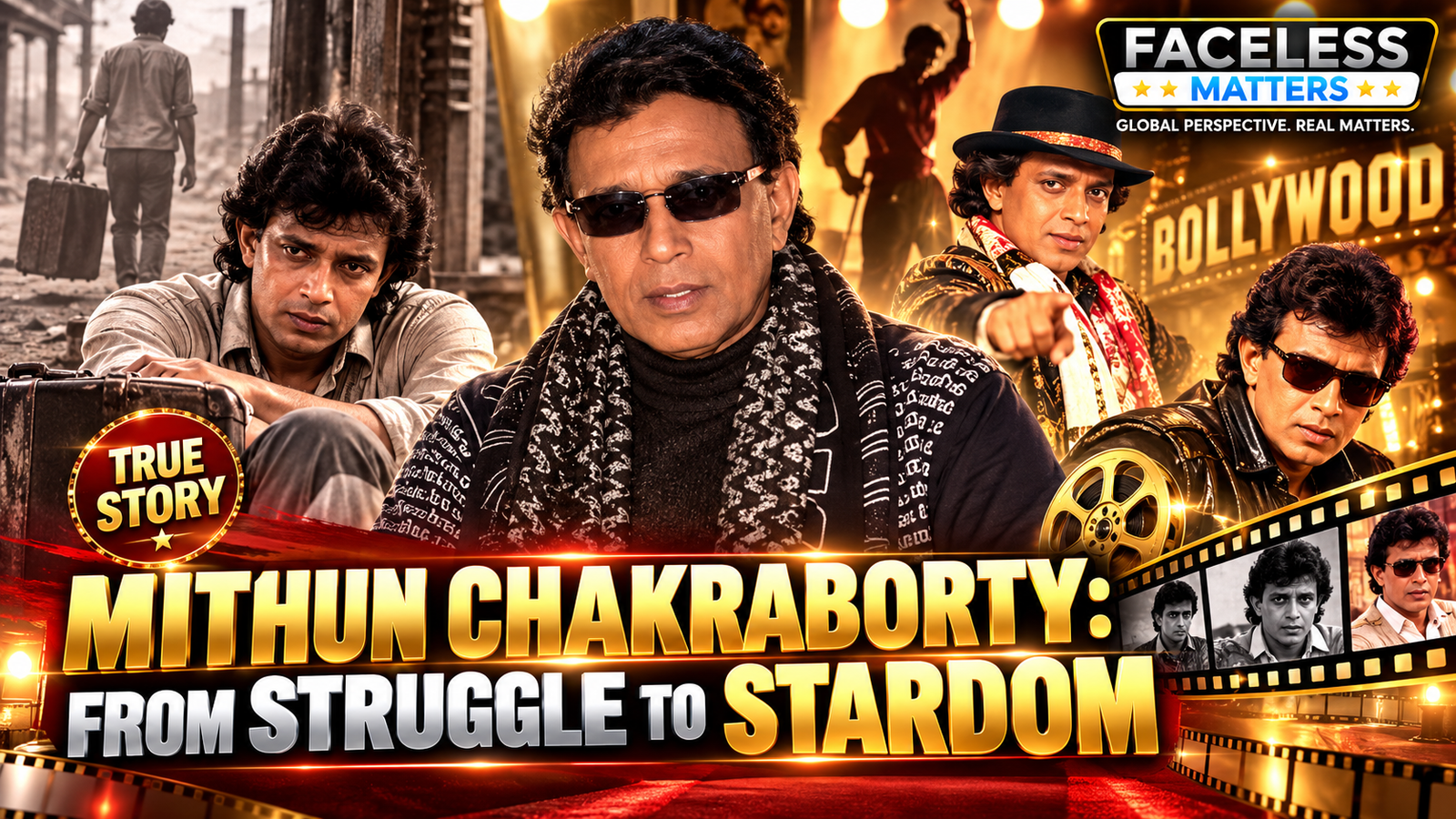
Mithun Chakraborty’s latest account of his early struggles has brought renewed attention to a part of his life that is very different from the superstar image remembered by generations of Indian cinema audiences. According to Daily Jang’s report, the veteran actor recalled difficult years when he sometimes danced at parties without charging a fee so that he could receive food, while he also experienced periods when he slept on streets, footpaths and in gardens.
The story is powerful not because hardship itself should be romanticized, but because it shows how far a person’s circumstances can change through persistence, work and opportunity.
For audiences who remember his energetic performances, distinctive screen presence and long association with popular Indian cinema, the revelation adds another dimension to a familiar public figure.
What Did Mithun Chakraborty Reveal?
The latest discussion about Mithun Chakraborty began with a conversation on Farah Khan’s YouTube vlog.
According to the Daily Jang report, Farah Khan recalled that during his early years, Mithun would attend parties connected with the film industry and dance without asking for a fee. The practical reason was simple: he needed food. Farah described the situation as an example of genuine struggle rather than the casual use of the word “struggle” that is sometimes associated with celebrity biographies.
The account becomes even more striking because the actor later became one of the best-known faces in Indian popular cinema.
The contrast is what makes the story meaningful.
A person once performing simply to receive dinner eventually built a career spanning decades and hundreds of films.
TABLE OF CONTENTS
The Reality Behind the Free-Meal Story
There is an important distinction between presenting this story as an inspirational slogan and understanding what it actually tells us.
The report does not suggest that hardship automatically creates success.
Instead, it documents a difficult period in the actor’s life.
Farah Khan said that Mithun sometimes received dinner in return for performing at parties. The report also says that he recalled sleeping on streets, footpaths and in gardens, including occasions when exhaustion caused him to fall asleep while walking.
That detail gives context to his later career.
Success did not arrive as a straight line.
There were periods of uncertainty, financial pressure and fear about whether his acting career would continue.
The positive lesson is therefore not that poverty is desirable.
It is that difficult circumstances do not necessarily define the final chapter of a person’s life.
A Career That Started With Recognition but Not Immediate Security
One of the most interesting parts of the story is that recognition and financial security did not arrive together.
Mithun began his film career with Mrigayaa, directed by Mrinal Sen, and received the National Film Award for Best Actor for the film.
Yet early recognition did not remove the practical difficulties of establishing a sustainable career.
Recent reporting notes that even after receiving major recognition, he faced periods in which work was uncertain.
That is an important distinction for anyone interested in the entertainment industry.
An award can validate talent.
It does not automatically guarantee commercial success.
An actor still needs opportunities, audiences, producers, directors and the ability to continue working.
Mithun’s career demonstrates that these stages can unfold at very different times.
From Mrigayaa to Commercial Stardom
The next major stage was the transition from serious cinema recognition toward mainstream popularity.
Mrigayaa established his acting credentials.
Later films helped him reach a much broader audience.
Among the titles associated with his rise were Surakshaa, Disco Dancer, Dance Dance, Pyar Jhukta Nahin, Kasam Paida Karne Wale Ki, Commando and other popular films.
The Indian Express notes that Surakshaa helped establish his commercial momentum, while Disco Dancer became a defining milestone in his rise to widespread fame.
This transition is significant.
He was not locked into one category.
He moved between different kinds of cinema and eventually became strongly associated with dance, action and mass entertainment.
That flexibility helped him connect with audiences beyond the traditional boundaries of one film genre.
Why the 1980s and 1990s Matter
For many South Asian viewers, especially those who grew up watching television and video releases during the 1980s and 1990s, Mithun became a highly recognizable entertainment figure.
His screen image was distinctive.
He combined dance, action, emotion and an accessible style that made him feel closer to ordinary audiences than some more traditionally glamorous stars.
The Federal’s retrospective on his 1990s appeal describes the unusual connection he developed with viewers and highlights the sense that his screen persona carried an everyman quality.
That connection helps explain why his name continues to generate interest decades after many of his most famous films were released.
Nostalgia is certainly part of the equation.
But nostalgia alone does not explain longevity.
The stronger factor is recognition.
Audiences remember performers whose style becomes identifiable.
The Everyman Connection
One of the most valuable elements of Mithun’s career is relatability.
He did not build his entire screen identity around an unreachable image of perfection.
His popularity often came from characters who struggled, fought, danced, worked and attempted to change their circumstances.
That made the difference between the actor and the audience feel smaller.
His story outside cinema reinforces that connection.
Someone who has personally experienced uncertainty can sometimes communicate struggle differently from someone who has only portrayed it on screen.
That does not automatically make every performance autobiographical.
But it can add emotional context to a career.
Google Arts & Culture’s retrospective on his career similarly highlights the cultural importance of Disco Dancer and his emergence as a major popular star.
When Stardom Was Not Enough
Another valuable part of the story is that even established fame did not eliminate professional uncertainty.
Indian Express reports that Mithun later recalled periods when his career appeared unstable and he feared that his acting career might end.
This is an important reminder about the entertainment business.
Celebrity status is not necessarily permanent.
Film careers can change because of:
- audience preferences;
- changing genres;
- competition;
- age;
- production economics;
- changing distribution models;
- and shifts in popular culture.
For an established actor, the ability to adapt can become as important as the ability to become famous in the first place.
Reinvention and the Ooty Chapter
During a difficult phase, Mithun and his family moved toward another business path in Ooty.
According to the Indian Express account, the decision was connected to concerns about career stability. His family operated a hotel, and the business became another chapter in his life.
The significance of this episode is broader than the hotel itself.
It shows an individual preparing for the possibility that one career may not remain reliable forever.
That is a useful lesson for people working in entertainment today.
A performer may have acting income.
A creator may have advertising revenue.
A musician may depend on live events.
A digital personality may depend on platform algorithms.
Diversification can provide another layer of stability.
Awards and Recognition
The latest Daily Jang report states that Mithun has received three National Film Awards and four Filmfare Awards. It also notes that he was awarded the Padma Bhushan in 2024 and received the Dadasaheb Phalke Award.
These honours provide a different perspective on the journey.
The story begins with an aspiring performer struggling to secure basic necessities.
It eventually reaches national recognition and major industry honours.
That transformation is why the recent revelation has resonated with audiences.
The awards do not erase the difficult years.
Instead, they show how different the final outcome became from the uncertainty of the beginning.
Why His Honesty Matters
There is something particularly powerful about a famous person openly discussing an uncomfortable chapter of life.
Public figures often become associated with polished photographs, successful films, awards and glamorous events.
The difficult years disappear from the public image.
Mithun’s account brings those years back into view.
That honesty can have value because it makes success look less like an overnight event and more like a long process.
It also gives younger audiences a more realistic understanding of careers.
Behind a successful name there can be:
uncertain income,
rejection,
temporary failure,
career changes,
personal responsibilities,
and difficult decisions.
Recognizing those realities can make success more meaningful rather than less.
The Bigger Entertainment Lesson
The story also reveals something about the entertainment industry itself.
Cinema careers are rarely predictable.
A performer can begin in one type of film and later become associated with a completely different audience.
A serious debut can lead to commercial cinema.
A dance role can become a cultural identity.
A difficult career phase can be followed by another period of success.
The industry changes continuously.
Streaming has now transformed distribution.
Social media has changed celebrity communication.
Short-form video has changed how old performances are rediscovered.
Classic films can find new audiences decades after their original release.
That means an actor’s legacy is no longer controlled entirely by the period in which the films were first released.
What His Story Means for Younger Artists
For aspiring actors, dancers and other creative professionals, the most useful lesson is not “become famous.”
It is more practical:
Build resilience before success arrives.
A creative career can involve long periods when recognition is limited.
The ability to keep learning, improving and adapting can matter greatly.
Mithun’s career also demonstrates the importance of accepting different kinds of work.
His filmography crossed genres and languages, and his career eventually extended beyond acting into other professional areas.
That adaptability helped create longevity.
For today’s creators, the equivalent might mean developing skills across:
- acting;
- performance;
- digital media;
- communication;
- production;
- entrepreneurship;
- and audience engagement.
The entertainment economy has become broader, but uncertainty remains.
FACELESS MATTERS Analysis
The most interesting part of the Mithun Chakraborty story is not the shocking detail that he once danced for food.
It is what happened after that period.
The story demonstrates the distance between a person’s current circumstances and eventual identity.
A struggling young performer can later become an established actor.
A difficult career period does not necessarily become a permanent career ending.
And a celebrity’s public image may represent only one part of a much longer personal journey.
The positive element here is authenticity.
When a successful artist openly discusses hardship, the audience gets a more complete picture of the journey.
It also creates an important cultural connection.
Many people who watched Mithun’s films during the 1980s and 1990s may have remembered the star first and the person second.
This account reverses that order.
It reminds audiences that before the famous name, there was an individual trying to find a place in a highly competitive industry.
That human dimension may be one reason his story continues to resonate.
What Happens Next for His Legacy?
Mithun’s legacy is now larger than any single film.
It includes his acting career, dance identity, awards, popular-cinema influence and the memories of multiple generations of viewers.
The current discussion could also encourage renewed interest in his older films.
Digital platforms and social media make it easier for younger audiences to discover classic performances.
That creates an interesting bridge between generations.
Older viewers remember the original cultural moment.
Younger viewers discover the performer through clips, streaming libraries and online discussions.
In that sense, a personal story about struggle can become part of a much larger conversation about how entertainment careers survive across generations.
FACELESS MATTERS Strategic View
The positive message is simple: Mithun Chakraborty’s story shows how dramatically a career can change. Mithun Chakraborty moved from periods of insecurity to a long and recognized place in Indian cinema. That does not mean every struggling artist will achieve the same result. It means early hardship does not define a person’s entire future. His journey highlights resilience, adaptability, honesty and the value of continuing to work.
There is another reason this account matters for audiences. Celebrity stories are often remembered through awards, famous songs, iconic characters and successful films, while the uncertain years that came before recognition can disappear from view. This account restores some of that missing context without suggesting that hardship itself is desirable.
For younger performers, the story also illustrates why a creative career should be understood as a process rather than a single breakthrough moment. Skills can develop gradually, opportunities can arrive at different stages, and professional identities can change as audiences and the industry change. The ability to adapt can therefore matter alongside talent.
For long-time viewers, the story adds a human dimension to a familiar entertainment figure. The star remembered from popular cinema was also a person who faced uncertainty before reaching a more established position. That contrast helps explain why stories about earlier struggles can create renewed interest even decades later.
The broader lesson is balanced: persistence can matter, but outcomes are never guaranteed. Mithun’s journey is one individual career, not a formula for success. Its value lies in showing that a difficult beginning can coexist with a long, varied and meaningful professional life.

Conclusion
Mithun Chakraborty’s revelation about dancing at parties for food offers audiences a rare glimpse behind the glamour of Indian cinema.
According to the Daily Jang report, his early years included performing without a fee in exchange for meals and periods of sleeping on streets, footpaths and in gardens.
Years later, the same performer built a career spanning more than 350 films and received major national and industry recognition.
For the generations that grew up watching him, especially during the great era of popular Indian cinema, his story adds another layer to an already familiar legacy.
The most positive lesson is not that hardship should be celebrated.
It is that honesty, resilience, adaptability and continued effort can give a person’s story a very different second chapter.
That may be the most valuable thing audiences can take from this revelation.
INTERNAL READING — FACELESS MATTERS
Bigg Boss 20 2026: 5 Powerful Signals Behind Reality TV’s New Entertainment Battle
Avatar Sequels 2026: What Comes After Fire and Ash?
Outer Banks Season 5 Ends the Pogues Era as Netflix Builds a New Kildare Story
AI Agents at the Edge: OpenAI’s RubyGems Incident Raises a Bigger Warning
Pakistan Energy 2026: 5 Critical Signals From Power Costs, LNG and Global Oil Markets
Pakistan Stock Market Under Pressure: Oil Shock, Hormuz Risk and What It Means for Investors
Gutenberg: ہر headline کے فوراً نیچے والا standalone URL plain URL ہی رہنے دیں اور اسے native WordPress Post Preview/Embed Card میں تبدیل کریں۔ Headline hyperlink اور native card دونوں برقرار رہیں۔
یہاں 3 Entertainment cards ہیں، جبکہ باقی cards Technology, Energy اور Finance/Markets سے ہیں، تاکہ reader discovery مختلف categories تک جائے۔ FACELESS MATTERS کے موجودہ Entertainment archive میں بھی یہ متعلقہ entertainment publications موجود ہیں۔
SOURCES & EDITORIAL NOTE
Daily Jang — 28 September 2026
Daily Jang report: Mithun Chakraborty discusses his early struggles
Indian Express — 28 September 2026
Indian Express report on Mithun Chakraborty’s early struggles
Hindustan Times — 28 September 2026
Hindustan Times report on Mithun Chakraborty’s early career
The Federal — retrospective on Mithun’s 1990s appeal
The Federal — Mithun Chakraborty and the 1990s
Editorial Note: This article distinguishes reported facts from FACELESS MATTERS analysis. The account of Mithun Chakraborty’s early hardships is attributed to the reporting and Farah Khan’s recollection. The positive interpretation concerning resilience, authenticity and career longevity is FACELESS MATTERS editorial analysis. No claim is made that hardship automatically produces success.