

TABLE OF CONTENTS
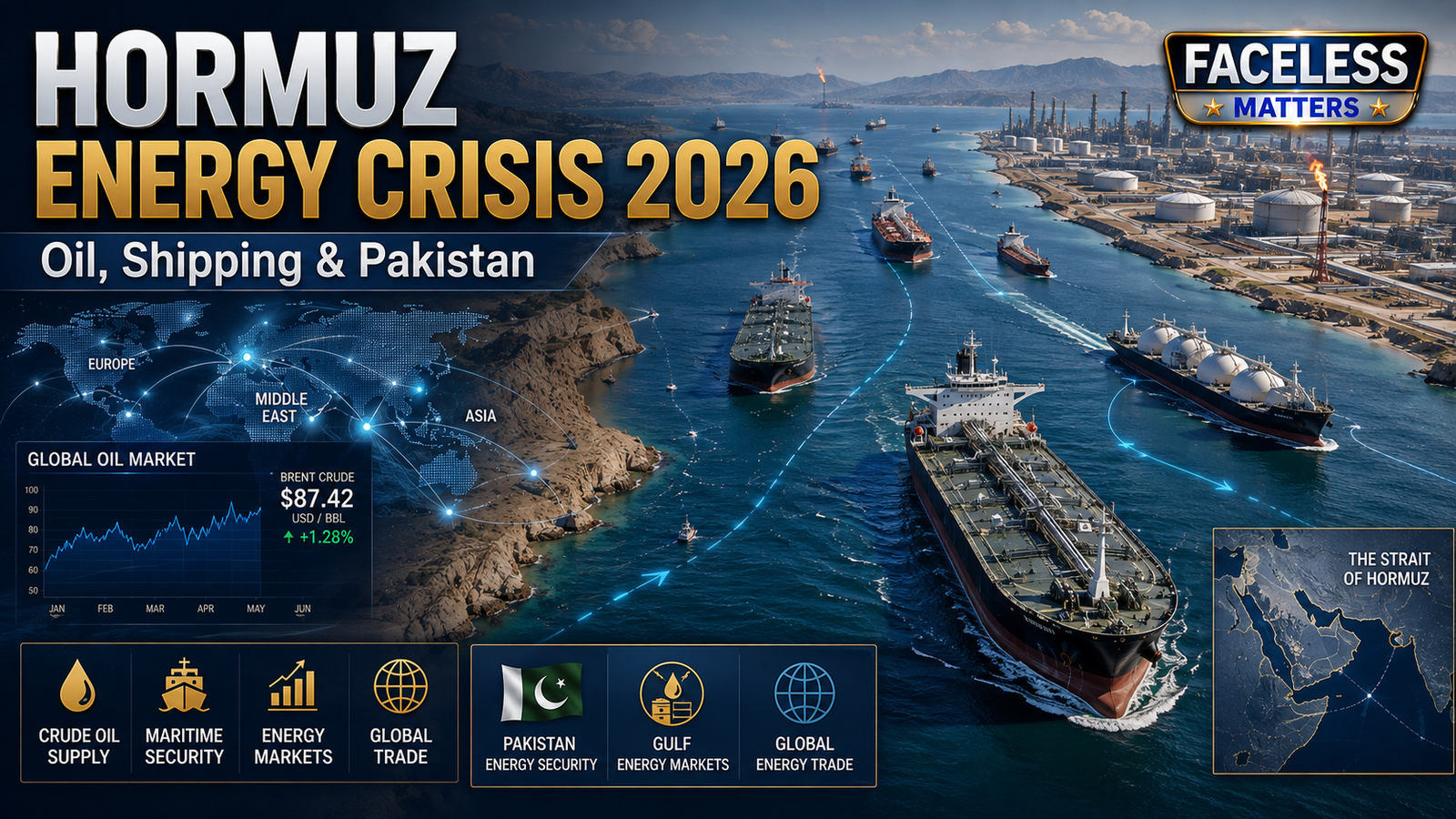
The Strait of Hormuz Energy Crisis 2026 has entered another important phase as diplomatic efforts continue, shipping activity shows signs of limited improvement and uncertainty remains over whether the strategic waterway can return to normal commercial operations.
The latest reporting is particularly significant because the story is no longer only about military confrontation. It is increasingly about oil supply, maritime trade, energy security, shipping insurance, fuel prices, inflation and economic stability.
Geo’s live coverage on August 28 reports that shipping traffic through the Strait of Hormuz has risen slightly, while Iran is preparing conditions for reopening the waterway and Qatar is pursuing diplomatic engagement in Tehran.
Reuters reporting carried by international outlets says Iran is preparing a list of conditions for reopening Hormuz, including an end to the regional war. Iran and Oman have also been discussing a possible shipping corridor through the waterway.
At the same time, international oil markets remain cautious. Recent trading showed Brent around the $90 area as uncertainty surrounding the diplomatic process continued.
For Pakistan, the issue has an additional dimension.
Pakistan imports substantial quantities of energy, meaning international oil-market movements can eventually affect transport costs, inflation, industrial activity and household budgets.
1. Why the Strait of Hormuz Matters to the Global Economy
The Strait of Hormuz is one of the world’s most important energy chokepoints.
Before the current conflict, roughly one-fifth of global oil and LNG shipments moved through the waterway. Reuters reporting says shipping has remained severely disrupted since the conflict began, with attempts to restore normal traffic failing to produce a lasting settlement.
This explains why the Strait of Hormuz Energy Crisis 2026 has become a global economic issue.
A disruption does not have to remove every barrel of oil from the market to affect prices.
Markets respond to uncertainty.
If traders believe that future shipments could become slower, more expensive or less reliable, they can demand a higher risk premium.
That risk premium can affect:
- crude oil prices;
- LNG prices;
- tanker rates;
- shipping insurance;
- refinery costs;
- fuel prices;
- inflation expectations;
- and investment decisions.
The energy market therefore reacts not only to physical supply but also to confidence in the transportation system.
The Strait of Hormuz Energy Crisis 2026 is therefore becoming a broader test of global energy security.
2. What Is Happening in Hormuz Today?
The latest picture is mixed.
On one side, Geo reports that shipping traffic has increased slightly. On the other, the overall situation remains far below normal and diplomatic uncertainty continues.
Reuters reports that Iran is preparing conditions for reopening the waterway after mediators asked Tehran to set out its requirements. Iran has also indicated that a designated shipping corridor could operate through parts of Omani and Iranian waters if its conditions are met.
That means the market is watching two different developments simultaneously.
The first is physical traffic.
The second is political agreement.
A waterway can technically be navigable while commercial shipping remains cautious because companies must also consider insurance, security assessments, sanctions exposure and potential disruption.
That distinction is critical.
3. Iran’s Conditions Could Determine the Next Energy-Market Move
Iranian officials have linked reopening Hormuz to broader political and economic conditions.
Reuters reports that Tehran’s proposed conditions include ending the regional war, while Iranian officials have also demanded changes relating to sanctions and the US naval blockade.
This makes the energy market highly sensitive to diplomacy.
If negotiations produce a credible framework for reopening the waterway, the risk premium embedded in oil prices could decline.
If negotiations fail, the market could continue pricing the possibility of prolonged disruption.
That is why the next major oil-price movement may be driven less by production data and more by diplomatic headlines.
The Strait of Hormuz Energy Crisis 2026 is particularly sensitive to any change in the diplomatic process.
4. Qatar’s Diplomatic Role Adds Another Layer
Qatar is also attempting to help move the diplomatic process forward.
Geo reported that the Qatari prime minister visited Tehran as efforts continued to reopen Hormuz and revive stalled diplomacy.
Qatar’s involvement is economically important because Gulf states have a direct interest in restoring predictable energy transportation.
For energy exporters, a functioning maritime route is essential.
For importers, predictable supply is equally important.
For insurers and shipping companies, stability reduces risk.
For consumers, stable energy logistics can reduce pressure on fuel prices.
The result is a situation where diplomacy has become directly connected to global energy economics.
5. Oil Prices Are Pricing Uncertainty
The latest international market reaction demonstrates how quickly diplomacy can influence crude.
The Business Times reported that WTI gained 1.6% to settle near $84 per barrel while Brent for October delivery was around $90 as concerns grew over the outlook for negotiations concerning Hormuz.
Another international report based on Bloomberg data similarly described Brent near $90 while the more-active November contract remained below that level.
This does not mean oil prices must remain at those levels.
Energy markets can move rapidly in either direction.
A credible reopening agreement could reduce the geopolitical premium.
A fresh disruption could increase it.
Therefore, investors and businesses should focus on the direction of physical shipping and diplomatic progress rather than relying on a single daily price.
For investors, the Strait of Hormuz Energy Crisis 2026 remains a major source of energy-market uncertainty.
6. Why Shipping Is as Important as Oil Production
A common mistake is to look at oil supply only from the production side.
A producer can have millions of barrels available.
But if ships cannot safely transport those barrels, the global market can still experience a shortage of delivered supply.
This creates several additional costs:
Insurance: War-risk premiums can increase.
Freight: Tanker owners may demand higher rates.
Waiting time: Vessels can spend longer avoiding risky areas.
Alternative routes: Longer journeys consume additional fuel and time.
Inventory: Buyers may hold additional stock as protection against disruption.
These costs can ultimately reach refiners, manufacturers and consumers.
The Strait of Hormuz Energy Crisis 2026 is therefore also a global logistics story.
The Strait of Hormuz Energy Crisis 2026 shows why reliable energy transportation is as important as energy production.
7. Pakistan’s Energy Exposure
Pakistan has a particularly strong interest in developments around Hormuz.
When global crude prices rise, Pakistan can face higher import costs.
Higher import costs can put pressure on the country’s foreign-exchange position.
Fuel prices can affect transportation.
Transportation costs can affect food and manufactured goods.
Higher business costs can affect inflation.
The chain is straightforward:
Higher global energy costs → higher import costs → higher transport costs → higher business costs → inflationary pressure.
This is why energy security is closely connected with economic security.
8. Pakistan’s Latest Fuel-Price Development
There is also an important domestic development.
Daily Jang reported on August 27 that petrol and diesel prices in Pakistan were reduced.
That provides some short-term relief for consumers and businesses.
However, the broader international energy environment remains uncertain.
A domestic fuel-price reduction today does not guarantee stable prices in the future because Pakistan’s petroleum market remains exposed to international crude prices, exchange-rate movements, freight costs and government pricing decisions.
This is an important distinction for consumers.
Today’s price is a domestic policy outcome.
Tomorrow’s pressure can still originate in international energy markets.
For Pakistan, the Strait of Hormuz Energy Crisis 2026 could influence future fuel and import-cost pressures.
9. Why Lower Fuel Prices Can Help the Economy
A period of lower domestic fuel prices can provide several benefits.
Transport operators may face lower operating costs.
Businesses can potentially reduce logistics expenses.
Households may have more disposable income.
Agricultural transportation costs can become more manageable.
Manufacturers may experience some relief in distribution expenses.
Lower fuel costs can therefore support economic activity.
But the benefit becomes more durable only if global energy markets remain stable.
That is why Pakistan’s energy strategy cannot depend exclusively on short-term petroleum-price adjustments.
Long-term resilience requires diversification.
10. Energy Diversification Is Becoming More Important
The current crisis demonstrates the importance of reducing excessive dependence on a single energy corridor or fuel source.
For Pakistan, diversification could involve:
- renewable energy;
- solar generation;
- wind power;
- hydropower;
- improved transmission;
- battery storage;
- domestic gas development where economically viable;
- LNG supply diversification;
- energy-efficiency measures;
- and stronger regional energy connectivity.
The objective is not necessarily to eliminate oil immediately.
The objective is to make the economy less vulnerable to a sudden external shock.
The Strait of Hormuz Energy Crisis 2026 also highlights the importance of long-term energy diversification.
11. The Global LNG Market Is Also Watching
Hormuz is not only an oil story.
LNG transportation is also strategically important.
Countries that depend on imported LNG need reliable shipping routes and predictable prices.
A prolonged disruption can affect power generation and industrial activity in importing economies.
That makes LNG security particularly important for Asian markets.
Any reopening of Hormuz could therefore have implications beyond crude oil.
It could also influence natural-gas markets, electricity generation costs and industrial energy planning.
12. The Energy Market Is Connected to Inflation
Energy is one of the most important inputs into the modern economy.
Fuel affects transportation.
Electricity affects manufacturing.
Gas affects industrial production.
Shipping affects imported goods.
Therefore, a prolonged energy shock can become an inflation problem.
This is especially important for central banks.
If oil rises because of geopolitical risk while economic growth weakens, policymakers can face a difficult choice.
Higher inflation may discourage rapid monetary easing.
But weaker growth may increase the need for supportive monetary policy.
This is one reason international investors are watching the Hormuz situation alongside inflation and interest-rate expectations.
The economic consequences of the Strait of Hormuz Energy Crisis 2026 could extend well beyond the energy sector.
13. What International Energy Companies Are Watching
Major energy companies are likely to focus on several indicators.
Tanker Traffic
Is commercial movement through Hormuz continuing to rise?
Brent Crude
Does the geopolitical premium remain embedded in prices?
LNG Shipments
Are gas cargoes moving reliably?
Insurance Costs
Are war-risk premiums declining?
Refinery Operations
Can Asian and Middle Eastern refineries maintain normal feedstock supplies?
Strategic Inventories
Are governments increasing or releasing energy reserves?
Diplomatic Progress
Are Iran, the United States, Oman and Qatar moving toward an enforceable framework?
These indicators can tell the market more than headlines alone.
14. The Difference Between “Open” and “Normal”
This distinction deserves particular attention.
A government can declare a waterway open.
But that does not automatically mean global shipping has returned to normal.
Commercial companies must consider:
- security;
- insurance;
- sanctions;
- vessel availability;
- port access;
- freight economics;
- and contractual obligations.
Therefore, the real test is not merely whether one vessel passes.
The real test is whether commercial traffic becomes consistent, predictable and economically viable.
That will be the strongest signal that the energy crisis is genuinely easing.
15. What Could Happen Next?
Three scenarios deserve attention.
Scenario A — Diplomatic Reopening
If negotiations succeed and shipping restrictions ease, more energy could reach international markets.
That could reduce the geopolitical risk premium in crude prices.
Scenario B — Partial Reopening
A limited corridor could allow selected commercial traffic while broader political disputes remain unresolved.
This would improve physical supply but might leave insurance and freight costs elevated.
Scenario C — Renewed Disruption
If diplomacy fails and maritime restrictions intensify, energy prices could rise again.
That would create additional risks for importers, manufacturers and consumers.
The most likely market reaction would depend on the scale and duration of the disruption.
16. Why Asia Is Particularly Vulnerable
Asia is one of the world’s largest energy-consuming regions.
China, India, Japan and South Korea all depend heavily on imported energy.
Manufacturing activity requires predictable energy supplies.
Airlines require jet fuel.
Shipping requires marine fuel.
Factories require electricity and natural gas.
Any sustained energy shock therefore has the potential to affect Asian economic growth.
For Pakistan, the geographic proximity of the Gulf makes this issue especially relevant.
Asia’s exposure makes the Strait of Hormuz Energy Crisis 2026 an important issue for regional economic planning.
17. The Long-Term Lesson for Pakistan
The Strait of Hormuz Energy Crisis 2026 should encourage Pakistan to think beyond temporary fuel-price management.
Long-term energy security requires:
Diversification — multiple sources of energy.
Efficiency — lower energy consumption per unit of economic output.
Infrastructure — stronger transmission and storage.
Renewables — greater domestic generation.
Strategic reserves — protection against temporary supply disruptions.
Regional connectivity — access to multiple energy corridors.
Financial resilience — the ability to absorb temporary import-price shocks.
These measures cannot eliminate global risk.
They can, however, reduce vulnerability.
18. Energy Security Is Becoming Economic Security
The current crisis demonstrates that energy policy is no longer a narrow technical issue.
It affects:
- inflation;
- interest rates;
- currencies;
- trade balances;
- manufacturing;
- transportation;
- household spending;
- corporate earnings;
- government budgets;
- and investment.
That makes energy security an essential part of economic policy.
The countries that can secure reliable energy at competitive costs will have a significant advantage in the global economy.
19. What Consumers Should Watch
For ordinary consumers, five indicators are particularly important.
Petrol and diesel prices — the most visible impact.
Electricity tariffs — important for households and businesses.
Food transportation costs — energy prices can affect the entire supply chain.
Exchange rate — imported energy is sensitive to currency movements.
Global crude prices — a major external input into domestic petroleum economics.
Following these indicators together gives a more accurate picture than following crude oil alone.
20. FACELESS MATTERS Strategic Assessment
The central issue in the Strait of Hormuz Energy Crisis 2026 is not whether one diplomatic meeting succeeds or fails.
The Strait of Hormuz Energy Crisis 2026 should therefore be assessed through both energy-security and economic-security perspectives.
The deeper issue is whether the international energy system can restore predictable movement through one of its most important chokepoints.
The latest developments offer cautious reasons for attention rather than certainty.
Shipping traffic has shown some improvement.
Iran is discussing conditions for reopening.
Qatar is engaging Tehran.
Oman remains involved in discussions.
But the political differences between Washington and Tehran remain substantial.
For Pakistan, the most sensible long-term response is not to predict the next oil-price move.
It is to strengthen resilience.
A diversified energy system can reduce exposure to external shocks.
A more efficient economy can reduce the amount of imported energy required.
A stronger domestic renewable sector can improve supply diversity.
And better infrastructure can make the economy more capable of absorbing temporary disruption.
The current crisis therefore presents both a risk and a policy lesson.
21. Internal Reading — Related FACELESS MATTERS Analysis
1. [Strait of Hormuz Crisis: Oil Above $90 in 2026] — Economy | Very Recent
This is the closest related FACELESS MATTERS analysis, examining oil prices, tanker traffic, shipping costs, inflation and Pakistan’s exposure to Hormuz disruption. Strait of Hormuz Crisis: Oil Above $90 in 2026
2. [World News 2026: 4 Major Global Risks to Watch] — World News | Recent
This broader international analysis connects the Iran conflict, energy security, trade, climate risk and global economic uncertainty. World News 2026: 4 Major Global Risks to Watch
22. Source Verification & Analysis
Geo News — 28 August 2026: Current live coverage on Hormuz shipping traffic, Iranian conditions for reopening and Qatar’s diplomatic engagement.
Daily Jang — 27 August 2026: Pakistan’s petrol and diesel price reduction and wider business/energy coverage.
Reuters — 28 August 2026: Iran’s conditions for reopening the Strait of Hormuz, possible shipping corridor with Oman and the continuing diplomatic dispute.
Bloomberg: Latest international oil-market reporting on Hormuz flows and crude prices.
UK Parliament House of Commons Library — 27 August 2026: Background assessment noting that the US-Iran talks remain stalled and that both blockades continue while only limited shipping traverses Hormuz.
The article separates reported developments from FACELESS MATTERS analysis and does not present future market outcomes as guaranteed facts.
23. Educational & Editorial Note
This article is intended for educational, informational and editorial analysis. It is not financial, investment, commodity-trading or professional advice.
Energy markets and geopolitical conditions can change rapidly. Readers should verify important financial or business decisions through appropriate official sources and qualified professionals.
24. Conclusion
The Strait of Hormuz Energy Crisis 2026 has moved beyond a regional security story.
It is now a test of global energy resilience.
Oil markets are watching shipping.
Shipping companies are watching security.
Governments are watching inflation.
Businesses are watching fuel costs.
And Pakistan is watching the international energy market because changes in imported fuel costs can eventually reach transportation, industry and households.
The latest developments provide some signs of movement, but they do not yet establish a return to normal.
The decisive indicator will be sustained commercial shipping through Hormuz combined with a credible diplomatic framework.
Until then, the global energy market is likely to remain sensitive to every major development involving Iran, the United States, Qatar, Oman and the Strait itself.
For Pakistan, the strategic lesson is clear: energy security must increasingly be treated as economic security.