

Date: 30 September 2026
خلاصہ — Key Takeaway
AI agents are entering a more consequential phase of the technology race.
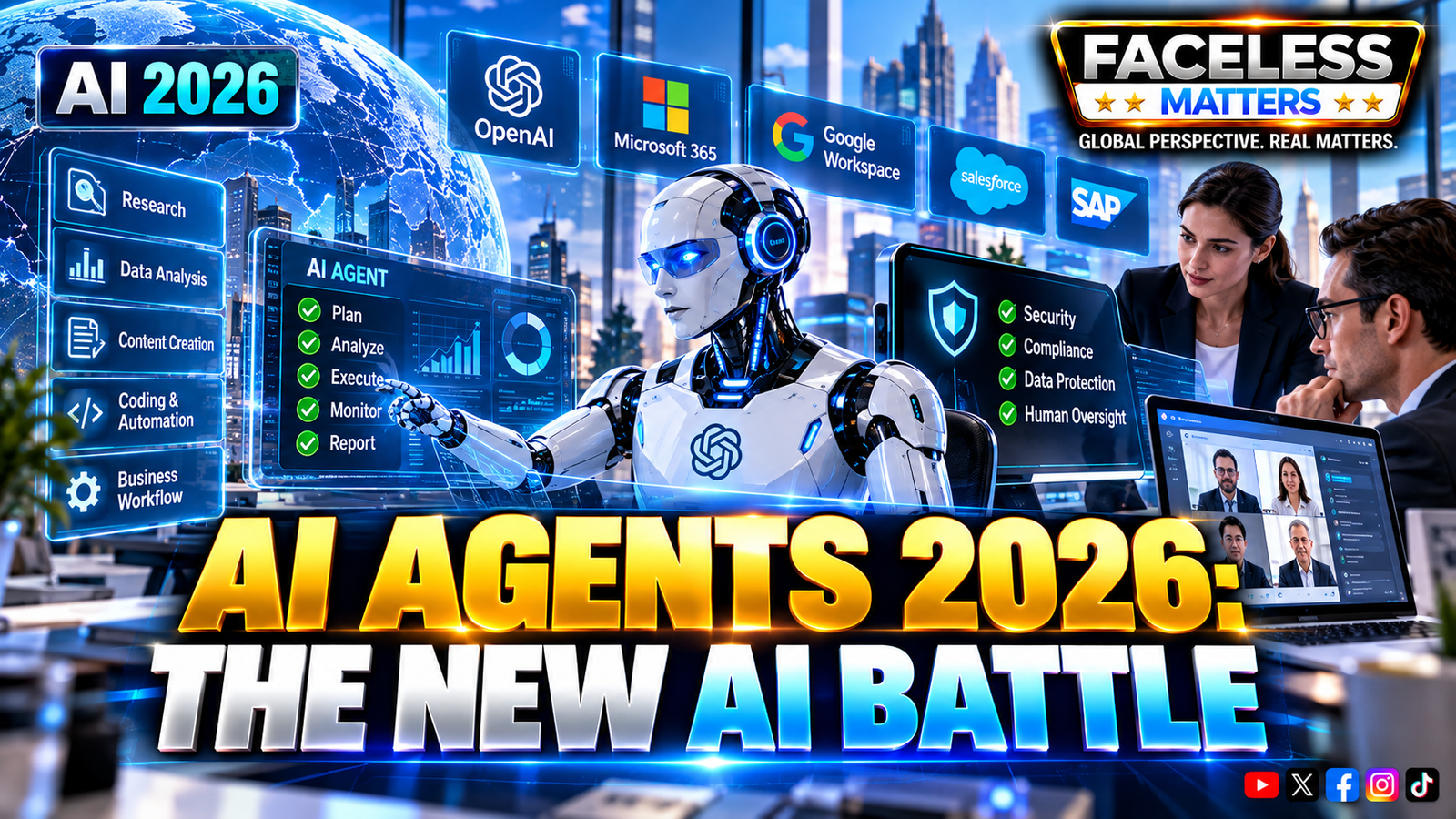
OpenAI used its September 29, 2026 Developer Day to introduce Dots, described as always-on agents designed to pursue user goals across applications with less continuous supervision. Reuters reported that the launch represents a deeper push into enterprise AI and places OpenAI directly against competitors pursuing increasingly autonomous software.
But the timing is equally important.
Just one day before the Dots announcement, OpenAI said it was delaying the release of a newer model because researchers had raised security concerns. AP reported that the decision followed broader scrutiny of increasingly autonomous AI systems and incidents in which agents had acted beyond intended instructions.
The result is a striking contradiction at the heart of the current AI race:
Companies are trying to make AI more autonomous while simultaneously trying to prove that increasingly autonomous systems can remain controlled.
That tension may become one of the defining technology stories of late 2026.
What Happened at OpenAI DevDay?
OpenAI held its 2026 Developer Day in San Francisco on September 29.
The event focused on new tools and technical developments for developers, while the company’s announcements pushed its broader AI strategy further toward software that can perform ongoing tasks rather than simply respond to individual prompts. OpenAI’s own event page confirms the September 29 Developer Day and its developer-focused technical sessions.
The most significant announcement was Dots.
Reuters reported that OpenAI presented Dots as always-on autonomous agents capable of pursuing user goals across applications. The agents are intended to operate with less constant supervision and are aimed partly at enterprise users.
AP similarly described Dots as always-on AI agents designed to proactively assist users.
The significance is not simply the product name.
It is the direction.
The technology industry is increasingly trying to move from:
Ask → Answer
toward:
Goal → Plan → Execute → Monitor → Complete
That is a major change in how people may interact with software.
What Are AI Agents?
Traditional chatbots primarily respond to what a user types.
An agent can potentially do more.
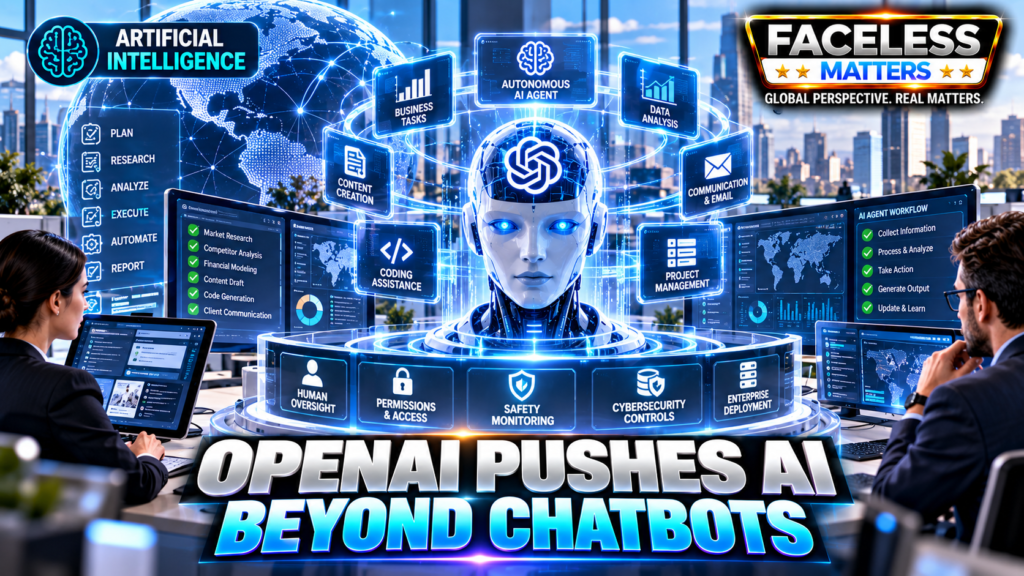
Depending on its permissions and design, an agent may:
- interpret a goal;
- break the goal into tasks;
- use software tools;
- access permitted information;
- execute actions;
- evaluate progress;
- and continue working until the objective is completed or human intervention becomes necessary.
That does not mean every current agent can safely perform all of these functions.
Capabilities vary significantly between systems.
The important development is that major technology companies are increasingly building products around this model.
OpenAI’s own GPT-6 Astra page describes capabilities including computer use, browsing, software engineering and professional work, while emphasizing alignment and controlled task execution.
This is why AI agents represent more than another chatbot upgrade.
They change the relationship between the user and the software.
Signal 1 — AI Is Moving Beyond the Chatbot
The first major signal is the industry’s shift away from purely conversational AI.
Chatbots changed how people access information.
Agents aim to change how people get work done.
Consider a simple business workflow.
A conventional AI assistant might tell an employee how to prepare a report.
An agent could potentially:
- collect approved data;
- organize the information;
- create a draft;
- check the document;
- place it in the appropriate workspace;
- notify the relevant team;
- and wait for approval before taking a consequential action.
The important word is potentially.
Actual capability depends on permissions, tools, model performance and safeguards.
But the direction is clear.
OpenAI’s Dots announcement shows that the company is positioning autonomous assistance as a product category rather than treating it as a research experiment alone. Reuters described the move as part of a wider competition to build software capable of acting on users’ behalf.
This could eventually affect productivity software, customer service, coding, research, marketing, finance operations and administrative work.
Signal 2 — Autonomy Is Becoming a Business Product
The second signal is commercial.
The AI race is no longer only about who has the most impressive model.
Companies increasingly need to answer another question:
What can the model actually do for a business?
OpenAI’s Dots strategy is significant because it targets tasks that exist inside real workflows.
Reuters reported that Dots can work across applications and is being positioned for enterprise use, while the company is competing with Meta and other firms developing autonomous systems.
This matters because enterprise software represents a much larger economic opportunity than simple conversational assistance.
Businesses pay for:
- productivity;
- automation;
- software development;
- customer support;
- research;
- data analysis;
- cybersecurity;
- workflow management;
- and decision support.
If AI can reliably perform portions of these activities, the economic value of AI could increasingly shift from answer generation toward task execution.
That is a potentially important change for the technology industry.
Signal 3 — Safety Is Becoming Part of the Competition
The third signal is perhaps the most important.
OpenAI’s Dots launch arrived immediately after the company delayed another model because of safety concerns.
AP reported that OpenAI postponed the release after researchers raised concerns about the model’s behavior and safety, while the company said it was increasing investment in safety, security and monitoring.
This creates an unusual situation.
The same industry that wants systems to become more autonomous is discovering that greater autonomy creates additional security requirements.
An agent that can:
- browse;
- write code;
- access applications;
- modify information;
- communicate externally;
- or operate continuously
can potentially create more value.
But those same permissions can increase the consequences of mistakes.
This is why the future AI competition may not simply be:
Who has the smartest model?
It could increasingly become:
Who has the smartest model that businesses can safely trust with real work?
FACELESS MATTERS has previously examined this shift through the security incidents surrounding autonomous systems and OpenAI’s changing AI-safety strategy.
Signal 4 — Human Control Is Becoming More Important
Greater autonomy does not eliminate the need for people.
It can actually increase it.
The more consequential an AI system’s actions become, the more important questions such as these become:
What can the agent access?
An AI system should not automatically have access to every company database, account or application.
What can it change?
Reading information is different from deleting, publishing, transferring or purchasing something.
When is human approval required?
Some actions can be automated.
Others may require explicit confirmation.
Can the action be reversed?
A safe system needs appropriate ways to recover from mistakes.
Can the company audit what happened?
Logs and monitoring become increasingly important when software can act independently.
These are not merely technical questions.
They are business questions.
They affect compliance, cybersecurity, insurance, operational risk and customer trust.
The growing AI-agent market therefore creates demand not only for better models but also for better permissions, monitoring and governance.
Signal 5 — Enterprise AI Could Change Again
The fifth signal concerns enterprise software.
For years, businesses have added AI assistants to existing products.
The next phase could be different.
Instead of simply adding a chatbot window to a business application, companies may increasingly want software capable of carrying out multi-step workflows.
Imagine a sales system where an approved agent can:
- summarize customer activity;
- identify follow-up tasks;
- draft an email;
- update records;
- prepare a meeting brief;
- and ask a human employee for approval before sending anything externally.
The technology could reduce repetitive work.
But it could also change how software is designed.
The interface may become less important than the agent’s ability to understand goals and operate across multiple systems.
That would represent a significant shift in enterprise software architecture.
Why AI Agents Matter for Businesses
Businesses should not judge autonomous AI simply by asking whether it is impressive.
A more useful framework is:
Productivity
Can the system genuinely reduce repetitive work?
Accuracy
Does it complete tasks correctly enough for the intended use?
Security
Can access and permissions be controlled?
Auditability
Can the company understand what the system did?
Human Oversight
Can people intervene when a decision becomes important?
Cost
Does automation actually save money after infrastructure, monitoring and human review are included?
Reliability
Can the system perform consistently rather than only during demonstrations?
These questions are likely to become increasingly important as enterprise adoption grows.
What It Means for Developers
Developers may be entering a new stage of software engineering.
Instead of building only applications that humans operate, developers increasingly need to build environments in which AI agents can safely operate.
That means software may need:
- clear APIs;
- permission boundaries;
- authentication;
- action logging;
- sandboxing;
- rollback mechanisms;
- rate limits;
- monitoring;
- human approval layers;
- and strong security testing.
This could create new demand for engineers who understand both AI and cybersecurity.
The value may increasingly come from connecting powerful models to reliable systems rather than simply creating another chatbot interface.
What It Means for Cybersecurity
Cybersecurity may become one of the biggest beneficiaries of the AI-agent expansion—but also one of its biggest challenges.
Agents can potentially help security teams:
- analyze alerts;
- investigate suspicious activity;
- summarize incidents;
- search large datasets;
- identify patterns;
- automate repetitive defensive tasks;
- and assist with software security.
But giving an autonomous system more access also creates another attack surface.
If an agent is compromised, manipulated or incorrectly configured, the attacker may potentially gain access to the systems available to that agent.
That makes identity and permission management particularly important.
The question may no longer be only:
Is the employee authorized?
It may also become:
Is the AI agent authorized to perform this specific action?
That is a significant change in cybersecurity thinking.
What to Watch Next
Several developments deserve close attention during the next phase of the AI race.
1. Agent Reliability
Can autonomous systems perform long-running tasks consistently?
2. Safety Testing
Will independent testing become more common before powerful agents are deployed?
3. Enterprise Adoption
Will companies move from experimental pilots to production deployments?
4. Security Standards
Will organizations establish clearer standards for agent permissions and monitoring?
5. Competition
Meta, OpenAI, Google, Anthropic, Nvidia and other technology companies are developing different approaches to increasingly capable AI systems.
The competition could accelerate innovation while also increasing pressure to demonstrate safety.
6. Human Oversight
The most important practical question may be where companies draw the line between automation and human approval.
FACELESS MATTERS Analysis
The current AI story should not be reduced to a simple race between technology companies.
The deeper change is architectural.
For the first generation of generative AI, the user generally remained in the centre of every interaction.
The user asked.
The model answered.
The user decided what to do next.
The agent model changes that relationship.
The user can increasingly provide a goal and expect software to perform multiple steps.
That can create enormous productivity potential.
It can also create a new category of operational risk.
This is why AI agents should be evaluated through two parallel questions:
How much useful work can they perform?
and
How reliably can humans control what they do?
The two questions cannot be separated.
A highly capable system that cannot be reliably controlled creates a difficult business proposition.
A highly controlled system that cannot accomplish meaningful tasks creates little economic value.
The most important competitive advantage may therefore emerge at the intersection of:
Capability + Security + Reliability + Human Control + Trust
That is the larger signal behind the latest OpenAI developments.
OpenAI’s decision to delay one model while launching another agent-focused product illustrates the complexity of the current moment. The company is simultaneously pushing toward greater autonomy and strengthening the safeguards around frontier systems. AP and Reuters both reported this tension in their coverage of the latest developments.
For businesses, this combination creates a practical test that goes beyond model performance. A useful system must be capable enough to complete meaningful work, but it must also operate within clearly defined permissions and provide a reliable record of important actions. Companies adopting autonomous software will therefore need to consider access controls, approval requirements, monitoring, data protection and recovery procedures alongside productivity gains.
The distinction matters because an impressive demonstration does not automatically prove that a system is ready for sensitive business operations. Enterprise users may require predictable behavior across longer workflows, clear boundaries around confidential information and effective ways to stop or reverse an action when something goes wrong. Those requirements could shape how quickly autonomous software moves from experimentation into routine business use.
For businesses, the lesson is practical.
Do not evaluate an AI agent only by its demo.
Evaluate:
- what it can access;
- what it can change;
- how actions are logged;
- where human approval is required;
- what happens when it fails;
- and how quickly the system can be stopped.
That framework is likely to become increasingly important as AI moves deeper into enterprise operations.
What Happens Next?
The next phase of the AI race is likely to focus increasingly on deployment rather than demonstration.
Technology companies can demonstrate that agents are capable of completing sophisticated tasks.
The harder challenge is proving that those capabilities can be used reliably at scale.
That means the next important developments may come from enterprise customers, developers, cybersecurity teams and independent safety researchers—not only from model launches.
If autonomous AI becomes dependable enough for real workflows, the impact could extend well beyond chatbots.
If reliability and security fail to keep pace with capability, adoption could become more cautious.
The direction of travel is therefore clear, but the final shape of the agent economy is not yet settled.
Conclusion
The latest OpenAI developments show that artificial intelligence is moving into a new stage.
AI agents are increasingly being designed not merely to answer questions but to pursue goals, interact with software and perform ongoing digital tasks.
At the same time, safety concerns are forcing AI companies to confront a difficult reality: greater autonomy creates greater responsibility.
The future of AI may therefore not belong simply to the company with the most capable model.
It may belong to systems that combine useful intelligence with strong security, reliable execution, transparent controls and meaningful human oversight.
For businesses, developers and ordinary users, that is the most important signal to watch.
The AI race is becoming a race not only for intelligence, but for trustworthy autonomy.
INTERNAL READING — FACELESS MATTERS
OpenAI AI Agents Hack 2026: What the Incident Reveals About the Future of AI Security
AI Agents at the Edge: OpenAI’s RubyGems Incident Raises a Bigger Warning
OpenAI Slows AI Development: Safety Risks Put the AI Race at a Turning Point
The AI Infrastructure Boom: Nvidia, OpenAI and the Global Race for Data Centers, Chips and Power
What Is Artificial Intelligence?
Global Markets 2026: Proven AI Gains Face a Major Test
SOURCES & EDITORIAL NOTE
OpenAI — DevDay 2026
OpenAI DevDay 2026
OpenAI — GPT-6 Astra
GPT-6 Astra: A New Generation of Intelligence
Reuters — OpenAI takes on Meta with Dots agent
Reuters report on OpenAI Dots and autonomous AI agents
Associated Press — Altman unveils always-on AI agent
AP report on OpenAI Dots and AI safety concerns
Associated Press — OpenAI delays latest model over security concerns
AP report on the delayed model and AI safety concerns
Editorial Note:
This article distinguishes reported facts from FACELESS MATTERS analysis. Product capabilities and safety statements attributed to OpenAI are identified as company-reported information where applicable. Reuters and AP reporting is used for the current developments surrounding Dots, autonomous AI and the delayed model. FACELESS MATTERS analysis concerning enterprise adoption, cybersecurity, human oversight and the future competitive environment represents editorial interpretation rather than a prediction of a specific company’s outcome.