

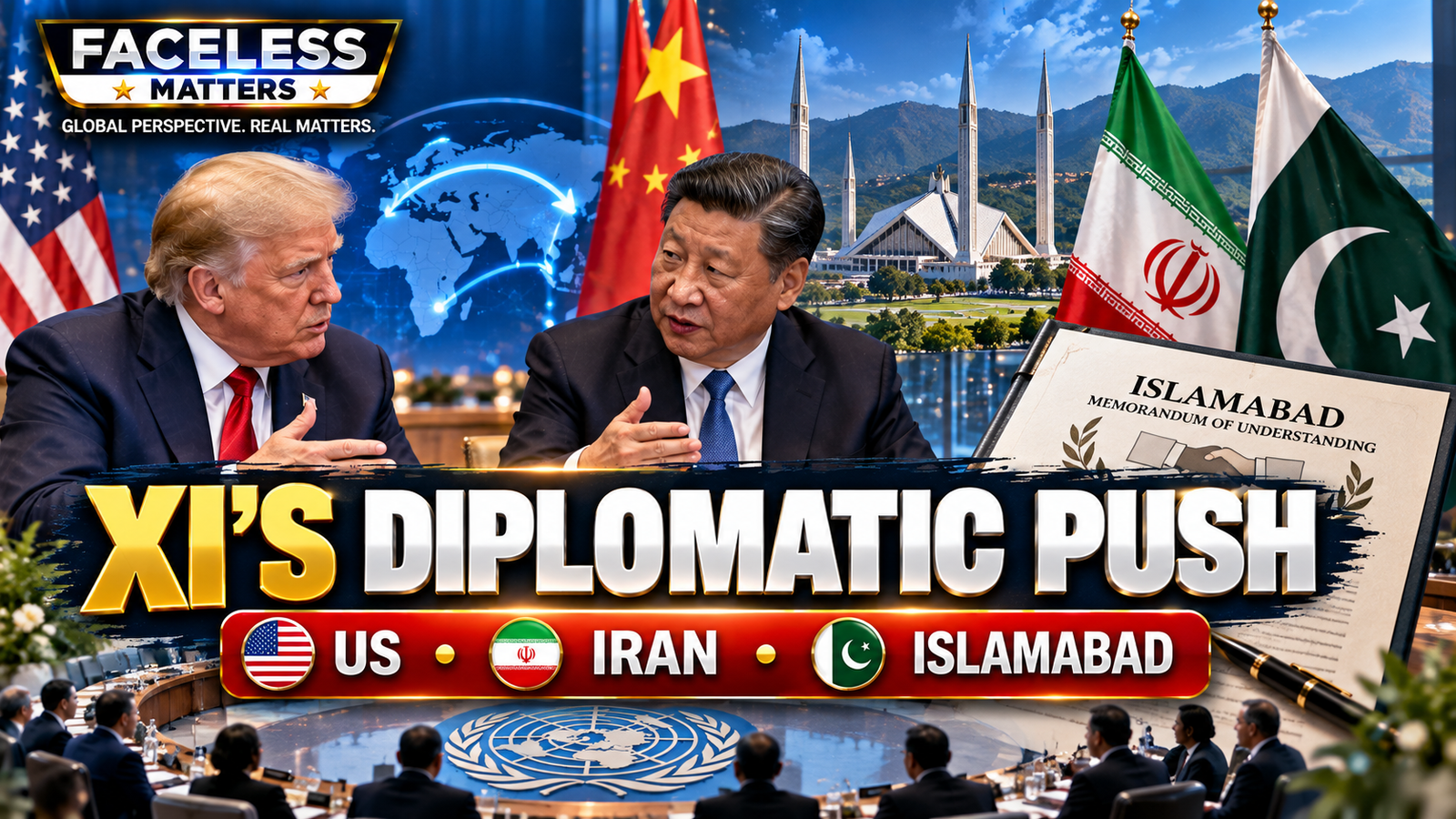
Xi Jinping Calls for Washington and Tehran to Resume Dialogue
25 September 2026
Key Takeaway
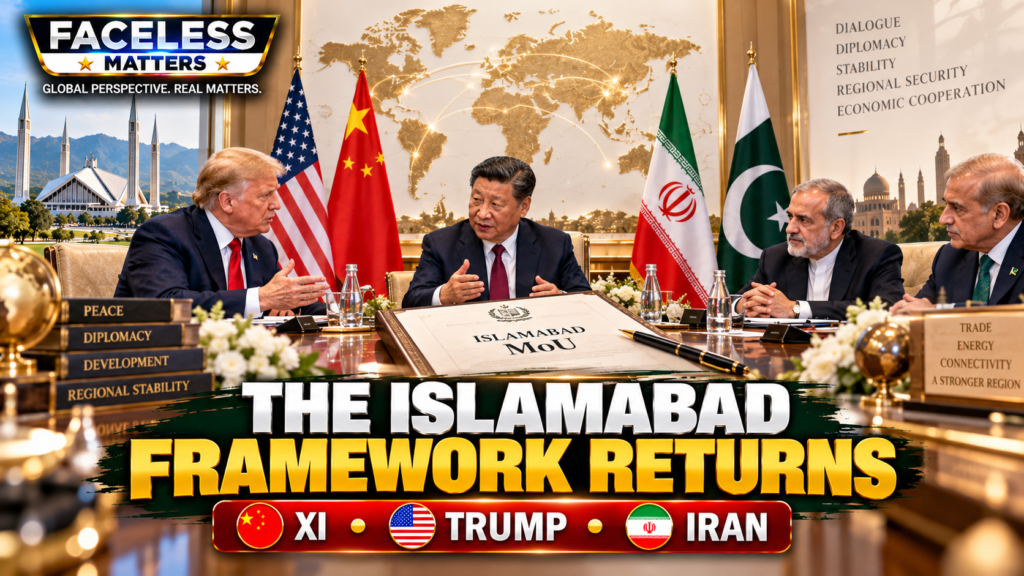
The latest US-Iran Islamabad MoU development has renewed attention on Pakistan’s mediation after Xi Jinping urged Washington and Tehran to return to the Islamabad framework.
During his September 24 meeting with U.S. President Donald Trump at the White House, Xi expressed hope that Washington and Tehran would return to dialogue and negotiation and eventually reach a comprehensive agreement covering the nuclear issue and other outstanding matters. China’s official account confirms that Xi specifically supported a return to the Islamabad memorandum.
The development does not mean that a new peace agreement has been signed or that negotiations have already been fully restored. It is a diplomatic call to revive an existing framework.
For Pakistan, however, the development is particularly significant because Islamabad played a mediation role in creating the framework in June.
What Happened Between Xi and Trump?
Chinese President Xi Jinping met Donald Trump at the White House on September 24 during Xi’s state visit to the United States.
According to China’s official government account, Xi encouraged the United States and Iran to return to the track of dialogue and negotiation as soon as possible. He also expressed China’s support for Washington and Tehran returning to the Islamabad Memorandum of Understanding.
Xi further expressed hope that the two countries could eventually reach a comprehensive agreement covering the nuclear issue and other matters.
The latest US-Iran Islamabad MoU signal therefore comes at a time when diplomacy remains closely connected to the wider conflict, regional security and international energy transportation.
The timing is also important because Xi’s meeting with Trump came after China had already been urging Iran and the United States to revive negotiations.
Why the Islamabad MoU Matters
The Islamabad memorandum is important because it provides an existing diplomatic framework rather than requiring Washington and Tehran to begin negotiations from zero.
Pakistan played a significant mediation role in the process, while Qatar was also involved in the broader diplomatic effort.
The framework was designed around several interconnected concerns, including ending hostilities, addressing the Strait of Hormuz crisis and creating a pathway toward wider negotiations.
That makes the US-Iran Islamabad MoU more than a narrow bilateral document.
Its possible implications extend into:
- Regional security
- Maritime trade
- Energy security
- Oil prices
- Shipping insurance
- Supply chains
- Sanctions
- Nuclear diplomacy
- Pakistan’s foreign policy
- Global financial markets
The framework therefore matters even to countries that are not direct participants in the negotiations.
What China Wants
China’s position has become increasingly clear.
Beijing has repeatedly called for restraint, dialogue and the restoration of diplomatic negotiations between Washington and Tehran.
On September 16, Chinese Foreign Minister Wang Yi met Iranian Foreign Minister Abbas Araghchi in Beijing and urged Iran and the United States to return to the Islamabad memorandum and rebuild the negotiating mechanism. China also called for steps to reopen the Strait of Hormuz and protect international energy transportation.
The latest appeal from Xi therefore follows an established Chinese diplomatic position rather than appearing as an isolated statement.
China has major economic interests in the Middle East, including energy imports and international trade routes.
A prolonged regional conflict creates risks for energy security, shipping and supply chains.
Beijing therefore has an economic as well as diplomatic interest in reducing escalation.
What Washington and Tehran Must Resolve
A return to the US-Iran Islamabad MoU would not necessarily mean that every original provision would automatically be accepted without changes.
The US-Iran Islamabad MoU has evolved.
Washington continues to focus heavily on Iran’s nuclear programme, sanctions and broader security concerns.
Tehran, meanwhile, has continued to emphasize sovereignty, national interests and the need for diplomatic engagement without abandoning its core positions.
This means renewed negotiations would probably involve several interconnected subjects.
Nuclear Issues
The nuclear question remains one of the central elements of any potential long-term settlement.
Sanctions
Economic sanctions and the question of economic relief could become major negotiating issues.
Security Guarantees
Both sides could seek assurances about future military actions and implementation.
Maritime Security
The Strait of Hormuz has become a major element of the wider crisis.
Implementation
Even if negotiators reach a political understanding, mechanisms for verification and implementation would remain essential.
The US-Iran Islamabad MoU challenge is therefore not simply restarting talks.
It is creating a framework that both sides consider sufficiently reliable to implement.
Pakistan’s Diplomatic Role
Pakistan is central to this story because Islamabad helped mediate the June understanding.
Prime Minister Shehbaz Sharif met Iranian President Masoud Pezeshkian on September 24 on the sidelines of the United Nations General Assembly session in New York.
According to reporting on the meeting, Shehbaz stressed the importance of implementing the Islamabad memorandum and reaffirmed Pakistan’s readiness to continue supporting regional peace and stability.
This gives Islamabad a continuing diplomatic role even though the decisive negotiations remain between Washington and Tehran.
The US-Iran Islamabad MoU also demonstrates how a middle power such as Pakistan can sometimes create diplomatic space between countries that have extremely difficult bilateral relationships.
For Islamabad, the opportunity is significant.
Successful mediation could strengthen Pakistan’s diplomatic profile while helping reduce regional instability.
But there is also a challenge.
Pakistan must maintain communication with multiple sides while protecting its own economic, security and foreign-policy interests.
The Strait of Hormuz and Global Energy Markets
One of the most important economic dimensions of the story is the Strait of Hormuz.
The waterway is one of the world’s most important energy transportation routes.
Disruption can influence:
- Crude oil prices
- LNG transportation
- Shipping insurance
- Freight costs
- Refinery margins
- Inflation
- Currency markets
- Import bills
- Global supply chains
China has specifically linked diplomatic de-escalation with the need to restore safe international navigation.
For Pakistan, this issue is particularly important.
Higher international energy costs can increase the country’s import bill and put pressure on foreign exchange requirements. Businesses can also face higher transportation and production costs.
Consequently, progress around the US-Iran Islamabad MoU could have economic implications well beyond diplomacy.
This does not mean that any specific future oil price can be predicted from the diplomatic development. It means that geopolitical risk remains an important variable for energy markets. Investors, importers and policymakers will also watch whether diplomatic signals are followed by practical steps on shipping, sanctions, negotiations and regional security. Until those steps become clearer, markets may continue to price uncertainty through energy costs, freight expenses, insurance premiums and broader risk assessments.
Five Signals to Watch
1. Will Washington and Tehran formally revive negotiations?
The most important immediate signal would be an official decision by both sides to reopen substantive talks.
2. Will the Islamabad framework remain the starting point?
Xi’s statement shows that China considers the existing memorandum useful. The next question is whether Washington and Tehran agree.
3. Can the Strait of Hormuz become a confidence-building issue?
Maritime security could provide one of the most practical areas for de-escalation.
4. Will Pakistan continue its mediation?
Islamabad has maintained contacts with Iran and regional partners while supporting continued diplomatic engagement.
5. Can China convert political influence into practical diplomacy?
China can encourage dialogue, but the substance of a settlement must ultimately be negotiated by the United States and Iran.
What Happens Next?
The US-Iran Islamabad MoU must now move toward formal diplomatic contact.
Washington and Tehran would need to determine:
- Where negotiations would take place
- Who would participate
- Which issues would be discussed first
- How previous commitments would be treated
- How sanctions issues would be addressed
- How maritime security would be handled
- What verification mechanisms would be required
Pakistan could remain useful if both sides continue to regard Islamabad as an acceptable diplomatic channel.
Qatar and other regional actors may also remain involved in parallel diplomacy.
The most important question is whether the diplomatic architecture can survive disagreements over implementation.
FACELESS MATTERS Analysis
The latest development should be understood as a diplomatic signal rather than a completed peace agreement.
The most important point is that the Islamabad framework still appears to provide a reference point for several major players.
China is publicly encouraging its revival.
Iran has previously described the memorandum as valid.
Pakistan continues to emphasize its implementation.
The United States must now determine whether returning to the framework fits its current strategic objectives.
The second major point is Pakistan’s diplomatic position.
Islamabad is not simply watching the conflict from outside. Its mediation helped create a framework that major powers are now discussing again.
That creates both an opportunity and a responsibility.
If diplomacy progresses, Pakistan could strengthen its role as a regional mediator while benefiting from greater regional stability.
If diplomacy collapses, Pakistan could face renewed economic pressure from higher energy costs, regional insecurity and uncertainty around trade routes.
The third important issue is China’s growing diplomatic role.
Beijing is increasingly presenting dialogue, negotiation and regional stability as alternatives to prolonged military confrontation.
The renewed emphasis on the US-Iran Islamabad MoU fits within that broader approach.
But China’s influence should not be overstated.
Beijing can encourage negotiations.
It cannot independently determine the final terms of an agreement between Washington and Tehran.
For global markets, the practical question is whether diplomatic progress can reduce uncertainty around energy transportation and regional security.
For Pakistan, the question is broader:
Can Islamabad preserve its mediator role while protecting its own economic and strategic interests?
That is where the importance of this latest diplomatic development goes beyond the headline.
What It Means for Pakistan
Pakistan has several direct interests in a reduction of US-Iran tensions.
Energy Security
Pakistan remains exposed to international oil and gas prices.
Regional Stability
A prolonged conflict close to Pakistan’s western border can create additional security and economic risks.
Trade
Regional instability can disrupt transportation routes and increase logistics costs.
Diplomacy
A successful mediation effort could strengthen Pakistan’s international diplomatic relevance.
Investment
Greater regional stability could improve the environment for trade and investment decisions.
Pakistan therefore has a clear interest in keeping diplomatic channels open.
However, Islamabad must also avoid presenting diplomatic efforts as guaranteed outcomes.
The credibility of mediation depends on maintaining trust with all sides.
Conclusion
The latest US-Iran Islamabad MoU development has brought Pakistan’s earlier mediation effort back into the international spotlight.
Xi Jinping has urged the United States and Iran to return to dialogue and to the Islamabad memorandum while expressing hope for a comprehensive settlement covering the nuclear issue and other unresolved matters.
The statement does not mean that a final peace agreement has been reached.
It does, however, demonstrate that the Islamabad framework remains part of the current diplomatic conversation.
The coming weeks will show whether Washington and Tehran can reopen substantive negotiations, whether the Strait of Hormuz can become more secure and whether Pakistan can continue playing a constructive mediation role.
The central test is no longer simply whether the parties support peace in principle.
It is whether they can transform an existing diplomatic framework into verifiable commitments, sustained negotiations and practical steps toward de-escalation.
INTERNAL READING — FACELESS MATTERS
World News 2026: 4 Major Global Risks to Watch
Pakistan SCO Chairmanship 2026–27: 5 Critical Tests After Bishkek
Iran China Security Proposal: 5 Critical Signals Behind Tehran’s Regional Security Message
Pezeshkian Saudi Arabia: 5 Key Signals for Regional Peace
Pakistan Energy 2026: 5 Critical Signals From Power Costs, LNG and Global Oil Markets
Pakistan Stock Market Under Pressure: Oil Shock, Hormuz Risk and What It Means for Investors
Gutenberg: ہر headline کے نیچے موجود standalone URL کو plain URL ہی رہنے دیں اور اسی URL کو native WordPress Post Preview/Embed Card میں تبدیل کریں۔ Headline hyperlink اور native card دونوں برقرار رہیں۔
SOURCES & EDITORIAL NOTE
Daily Jang — 25 September 2026
اصل خبر: Xi Jinping urges Trump to bring the United States and Iran back to the Islamabad memorandum. Daily Jang report
China — Official Government Account
Xi Jinping’s September 24 White House meeting and his call for the United States and Iran to return to dialogue and the Islamabad Memorandum of Understanding. China Government report
China Ministry of Foreign Affairs
Wang Yi’s September 16 meeting with Abbas Araghchi and China’s call for restraint, renewed negotiations and return to the Islamabad memorandum. Chinese Foreign Ministry statement
Dawn — Pakistan’s Diplomatic Role
Prime Minister Shehbaz Sharif’s September 24 meeting with Iranian President Masoud Pezeshkian and emphasis on implementing the Islamabad memorandum. Dawn report
Editorial Note: This report separates confirmed statements, official positions, reported developments and FACELESS MATTERS analysis. The article does not present a final peace agreement, fully restored negotiations or restored Strait of Hormuz security as accomplished facts. Any discussion of possible economic or diplomatic effects is analytical rather than a prediction.