

Date: 18 September 2026
Key Takeaway
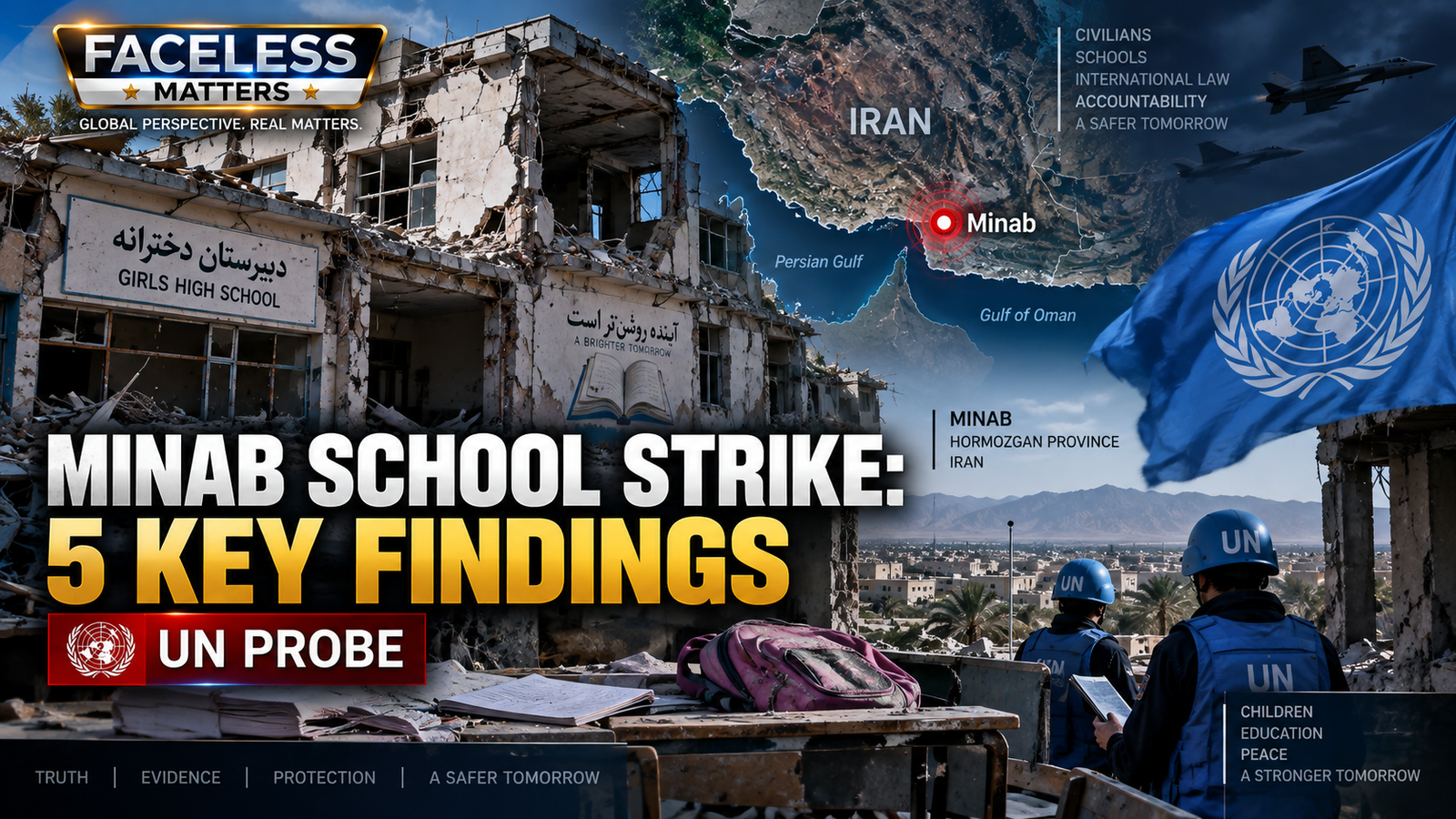
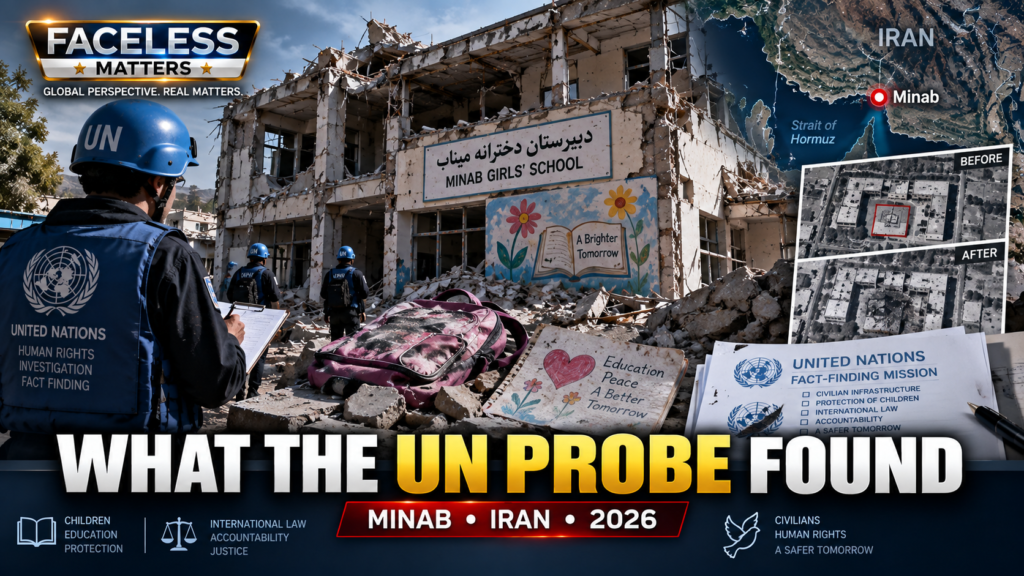
The Minab school strike has become a major international-law issue after a UN-mandated fact-finding mission said there were reasonable grounds to believe the United States was responsible for the February 28 attack on Shajareh Tayyebeh Primary School in Minab, Iran. The investigation has drawn attention to how the target was identified, what intelligence was available before the attack and whether sufficient precautions were taken to protect civilians.
The Minab school strike is therefore being examined not only through the reported casualty figures, but also through questions about target verification and the application of international humanitarian law. The available record contains findings from the UN mission as well as statements from U.S. officials, and those positions should remain clearly separated. Further evidence or official investigations could add context to the circumstances surrounding the attack. The distinction is important when assessing disputed wartime evidence and competing accounts.
The mission said the school had clearly identifiable civilian characteristics and that the United States had failed to do everything feasible to verify that it was a military objective before the attack. The finding has intensified questions about intelligence, target verification and civilian protection during the Iran war.
The report is not a criminal-court conviction. It is an investigative finding by a UN-mandated fact-finding mission. The United States has rejected the conclusions, and investigators did not receive access to U.S. personnel or all requested information.
TABLE OF CONTENTS
What Happened in Minab?
The Minab school strike took place on February 28, 2026, when the United States and Israel launched military operations against Iran.
The target was Shajareh Tayyebeh Primary School in Minab, in Iran’s Hormozgan province.
The United Nations fact-finding mission later investigated the attack as part of a broader examination of conduct during the Iran conflict.
Reuters reported that the mission found reasonable grounds to believe U.S. forces were responsible for the strike and concluded that the attack could constitute a war crime.
The investigation focused particularly on the civilian character of the school and the process used to identify the target.
That distinction is important.
The central issue is not simply whether a missile hit a school. It is also what information was available before the strike, how the target was identified and whether sufficient precautions were taken to protect civilians.
Why the UN Investigation Matters
The Minab school strike has become important because it raises questions about how modern military forces use intelligence to identify targets.
In a conflict involving missiles, drones, aircraft and long-range weapons, decisions can depend on satellite imagery, surveillance systems, intelligence assessments and rapidly changing battlefield information.
If that information is incomplete or outdated, the consequences can be severe.
The UN mission said the school had features that made its civilian nature apparent. Investigators examined photographs, videos, satellite imagery and other material as part of their assessment.
The mission’s conclusion was that the United States failed to do everything feasible to verify that the school was a military objective before directing the attack.
What Did the UN Mission Find?
The UN mission did not simply record that a civilian facility had been damaged.
It examined the circumstances surrounding the targeting decision.
According to Al Jazeera’s report on the findings, investigators said the school had readily identifiable characteristics associated with an educational facility for young children. These included children’s murals, school signage and playground areas.
The mission also examined publicly available satellite imagery and other evidence.
Reuters reported that the mission concluded there were reasonable grounds to believe the United States was responsible for two February strikes in Iran: the attack on the Minab school and another strike on a sports facility in Lamerd.
The mission said both incidents could amount to war crimes.
That is a finding by an investigative body, not a final judgment by a criminal court.
Was the School Clearly Identifiable?
This is one of the most important parts of the investigation.
According to the UN findings reported by Al Jazeera, photographs and videos showed features associated with a school for young children.
The investigation referred to:
- children’s murals;
- school signage;
- playground areas;
- and other visible characteristics of the facility.
The mission therefore questioned whether the available intelligence should have led U.S. forces to recognize the site’s civilian character.
The issue becomes particularly important because the school was located near an Iranian military facility.
Proximity to a military installation does not automatically transform every nearby civilian building into a military objective.
That is why the UN mission focused on verification of the actual target rather than simply its geographic proximity to a military site.
What Happened to the Children?
The civilian death toll has been one of the most devastating aspects of the Minab school strike.
Reuters reported that more than 150 people were killed, including approximately 120 children. Other reports have cited different casualty totals, which is why FACELESS MATTERS attributes casualty figures to their respective sources rather than presenting a single number as independently verified.
The attack became an international symbol of the civilian risks created when military operations take place around schools and other protected civilian locations.
The UN investigation said photographs and videos from the site showed extensive destruction.
The mission’s concern was therefore not only the scale of the casualties but also whether the attack complied with the obligation to distinguish civilian objects from legitimate military targets.
The “Mistake” Question
A major point of disagreement concerns whether the attack was an unintended mistake.
President Donald Trump previously said that nobody intentionally attacked a girls’ school in Iran and referred to an investigation into the incident.
The new UN findings place greater emphasis on the targeting process.
The mission concluded that when the school was identified and attacked, the United States had failed to do everything feasible to verify that it was a military objective.
That does not automatically establish that the school was deliberately selected because it was a school.
It does, however, explain why the UN investigation raised serious legal questions about the attack.
For responsible reporting, these two issues should not be confused:
Intentional targeting and failure to adequately verify a target are not identical claims.
What the United States Says
The United States has rejected the UN mission’s conclusions.
According to Al Jazeera, the White House criticized the findings and disputed the mission’s assessment of U.S. conduct.
The U.S. position is important because the UN investigation did not have access to American military personnel.
Al Jazeera reported that neither Washington nor Israel granted the mission access to personnel or responded to its requests for information. Investigators therefore relied on satellite imagery, verified video, weapons analysis and witness accounts from available sources.
This limitation does not erase the UN findings, but it is an important part of understanding their evidentiary basis.
Why Target Verification Matters
The Minab school strike highlights a broader problem in modern warfare: the quality of intelligence can directly affect civilian safety.
A military commander may have to make decisions using information collected from multiple sources.
But information can become outdated.
A location can change.
A military facility can be close to a civilian building.
And an intelligence assessment can turn out to be wrong.
International humanitarian law therefore places importance on distinguishing military objectives from civilian objects and taking feasible precautions.
The UN mission’s conclusion specifically focused on this verification requirement.
That is why the case has implications beyond Iran.
What the Finding Does — and Does Not — Establish
What the investigation found
The UN mission found reasonable grounds to believe:
- U.S. forces were responsible for the Minab strike.
- The school was a civilian facility with identifiable educational characteristics.
- Target verification was inadequate according to the mission’s assessment.
- The attack could constitute a war crime.
What it does not establish by itself
The UN mission’s report is not a criminal-court verdict.
It does not itself convict an individual.
It does not automatically create a criminal sentence.
And it does not settle every disputed question about the intelligence available to U.S. commanders.
Those questions could remain relevant to any future investigation or accountability process.
What Happens Next?
Several developments could determine the next stage of the case.
1. UN Human Rights Council
The findings are being presented within the UN Human Rights Council process.
2. Further Investigations
Additional evidence could affect future assessments of what U.S. commanders knew before the strike.
3. Accountability Questions
The UN fact-finding mission cannot itself conduct a criminal prosecution.
Its findings could nevertheless become part of future legal or accountability discussions.
4. U.S. Response
Any future American investigation or release of military information could provide additional context about the targeting decision.
5. Civilian Protection
The incident is likely to remain relevant to discussions about how military operations are conducted around schools, residential areas and other civilian infrastructure.
FACELESS MATTERS Analysis
The Minab school strike should be understood through evidence rather than slogans.
The UN mission has made a serious finding: it says there are reasonable grounds to believe the United States was responsible and that the attack could constitute a war crime.
At the same time, the United States disputes the finding, and investigators lacked access to U.S. personnel.
That means responsible reporting requires both facts to remain visible.
The most important question in the Minab school strike is therefore not simply whether one side calls the attack accidental or whether another side calls it a war crime. The deeper issue is how the target was verified, what intelligence was available before the strike, whether the school’s civilian characteristics were visible, and whether feasible precautions were taken before the weapon was launched. These questions help separate documented investigative findings from disputed interpretations and conclusions requiring additional evidence.
The deeper issue is how the target was verified before the weapon was launched.
If a civilian school was identifiable as such before an attack, questions about intelligence, verification and precaution become unavoidable.
If U.S. authorities later release additional evidence showing what commanders knew at the time, that evidence would be important in assessing the competing accounts.
For now, the UN investigation has placed the incident firmly on the international accountability agenda.
Conclusion
The Minab school strike has moved from a disputed battlefield incident to a major international investigation.
The UN fact-finding mission says there are reasonable grounds to believe U.S. forces were responsible and that the attack could constitute a war crime. The United States rejects the findings.
The most important unresolved question concerns the targeting process: what information was available before the strike, and was the civilian nature of the school adequately verified?
That question matters not only for this case, but for the wider rules governing civilian protection in modern warfare.
INTERNAL READING — FACELESS MATTERS
Strait of Hormuz Crisis: Oil Above $90 in 2026
Iran Strait of Hormuz: 5 Strategic Signals Behind Tehran’s Latest Warning
Iran US Drone Display: 5 Strategic Signals Behind the Move
Pakistan Energy 2026: 5 Critical Signals From Power Costs, LNG and Global Oil Markets
Pakistan Oil Crisis: 5 Proven Lessons From the Iran War
SOURCES & EDITORIAL NOTE
Reuters — September 17, 2026: UN fact-finding mission findings on the Minab school and Lamerd strikes. Reuters report
Al Jazeera — September 17, 2026: Detailed report on the UN fact-finding mission’s findings. Al Jazeera report
Al Jazeera — September 18, 2026: Explainer on what the UN findings mean and the U.S. response. Al Jazeera explainer
Editorial Note: This article distinguishes between UN investigative findings, official statements, reported facts and analysis. The UN mission’s findings are not presented as a criminal-court conviction. U.S. positions are attributed to U.S. officials, and casualty figures are attributed to the sources reporting them.